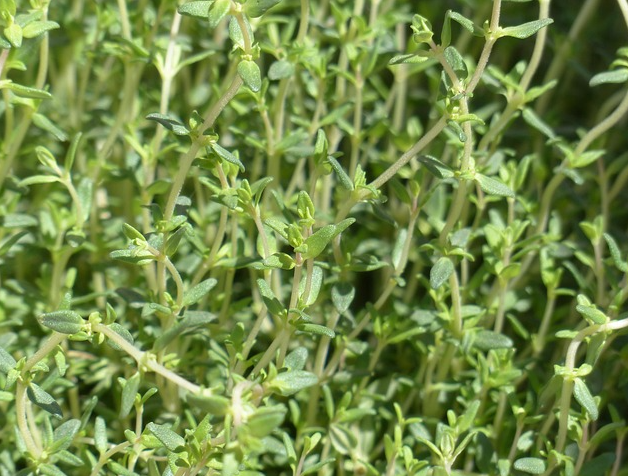
Thyme, or as it is called in Hebrew – kornit, is a spice plant that has been used for culinary and medicinal purposes for at least 5,000 years in a way that crosses kitchens and cultures. It is an annual plant from the Lamiaceae family that includes dozens of varieties common in Asia, Southern Europe, and North Africa.
This fact, together with the plant's intense aroma, caused it to be adopted (simultaneously or in slight succession) by most cultures of the ancient world. The earliest evidence comes from the ancient civilization of Egypt.
It turns out that thyme, together with rosemary, was a fundamental component in the mummification process of the pharaohs – to this day, archaeologists who study ancient mummies from Egypt report a present aroma of thyme when opening the sarcophagus. It is important to note that alongside the morbid use, thyme served the Egyptians both as a medicinal plant and as a preferred spice, and as mentioned, this is not the only ancient culture that knew and appreciated thyme.
On the other side of the Mediterranean, the Greeks used thyme for many purposes. As a medicinal plant, it was considered a pain reliever, helpful for breathing problems, calming, and possessing antibacterial properties (this is probably one of the reasons that made it a popular spice). By the way, modern science that examined thyme found that it has a high concentration of salicylic acid, which is the active ingredient in aspirin, so much of the medicinal properties attributed to thyme definitely have a basis.
The Greeks are also those who gave thyme its foreign name, which evolved from the Greek word Thumos. This word can be interpreted in several meanings, either as smoke or as 'courage'. Both meanings lead us to another role that thyme played in Greek culture – as part of the incense components in ceremonies.
This matter brings us right to our sources, because in Judaism too, thyme is considered an incense plant, and from here this matter also reached the Christian church. According to the Christian gospel, at the event of Jesus' birth, incense was lit in which thyme was one of its components.
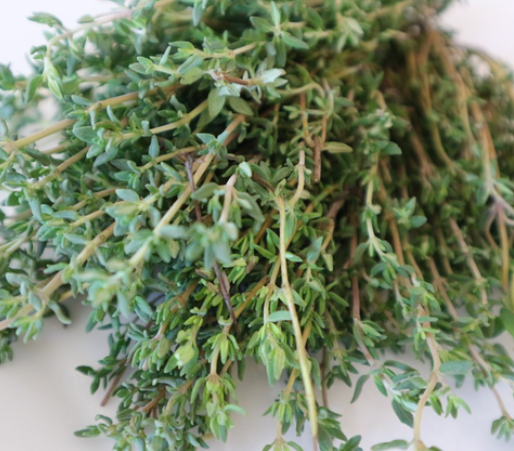
We already mentioned in the opening that the Hebrew name for thyme is kornit. This is not an invention of the Hebrew Language Academy and not a revival of an abandoned word. This is the name that appears for the plant in ancient Hebrew sources (sometimes also in the Aramaic transcription 'kornita'). So yes, thyme or kornit is not a novelty and has accompanied us for many years. There are, of course, excellent reasons for this. Because with all due respect to folk medicine and Christian saints, ultimately we are talking about a wonderful spice with a present influence in modern kitchens.
Through the Roman Empire, thyme became common also in Western and Northern Europe, and it is considered one of the basic components in French cuisine (part of what is called 'herbes de Provence'). In the same breath, it never disappeared from Middle Eastern cuisine, and I am sure that in the spice cabinet in your kitchen there is also dried thyme.
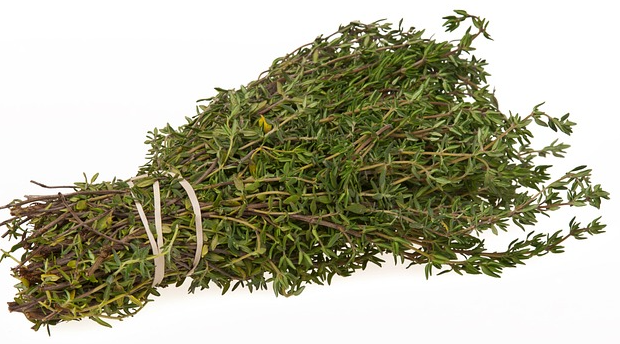
I have nothing against dried thyme – a beautiful spice – but you now have an opportunity for fresh thyme, and there really is no comparison: in salad, in soups, meat dishes, fish – the aroma of fresh thyme will always make the difference.