For me, when Shelly variety mango arrives, it's a sign that summer has truly come, and this year it arrived early. I will return to the sweet and Israeli Shelly variety but first let us remember mango in general.
In our experience, mango is part of the landscape. When we close our eyes, it is easy for us to imagine some 'Abraham our father' in Aram Naharaim (in the area of present-day Iraq) dipping pita in amba. After all, amba (which is actually fermented mango spread) is a fundamental culinary component in Iraqi cuisine – well, not quite.
In fact, mango arrived in Iraq only in the 19th century, and only then did amba come into the world. That is, in its Iraqi name, because fermented mango spread is not an Iraqi invention and has existed for hundreds and even thousands of years and is known in India as chutney. Yes, wild varieties of mango originated in Southeast Asia and especially from the Indian subcontinent, where this plant was domesticated already 5,000 years ago.
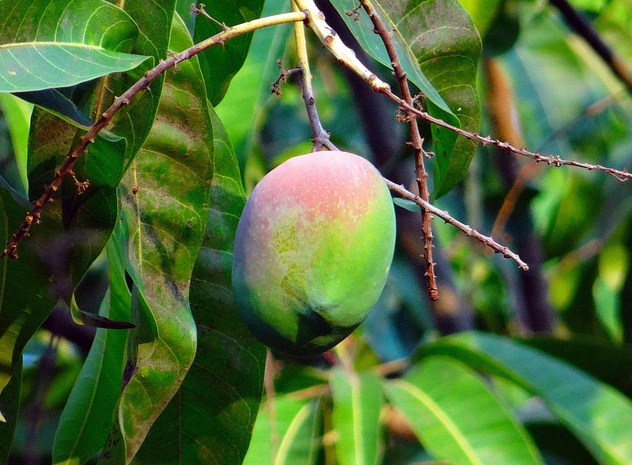
Mango is the national fruit of India, the national fruit of Pakistan, the national fruit of the Philippines, and if you are looking for a twist, it is also defined as 'the national tree of Bangladesh'. Speaking of trees, unlike many fruit trees, mango is long-lived and produces fruit even at an advanced age. There are 300-year-old mango trees in India that still yield fruit. Surprisingly, it took time for mango to reach the West (and as we mentioned, also the Middle East).
The first description of the fruit in the West comes from Portuguese sailors in the 16th century, but it took a long time before the West discovered its potential as an agricultural crop. For example, mango arrived in North America only at the beginning of the twentieth century through an adventurous botanist named David Fairchild who was sent by the American government to bring mango to the United States.
Fairchild traveled to India and purchased a thousand fruits, only to discover that the weight of the fruits did not allow them to be loaded onto the ship. Legend tells that Fairchild gave the local children the mangoes to eat and keep the pits. He collected the pits, loaded them onto the ship, and from these pits grew and developed the mango varieties that flourish today in Florida orchards.
As with many other fruits, there is enormous varietal diversity in mango. More than 500 commercial varieties are known, and many diverse types of mangos can be found in different shapes, colors, sizes, and of course flavors. There are sour mangoes, there are sweet mangoes, there are mango varieties with a certain spiciness, and there is even a mango variety whose taste resembles pineapple.
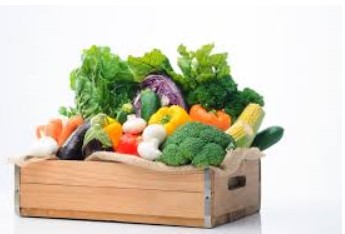
In Israel, the first mango plots were planted in the 1930s and are based on mango seedlings that came from Florida (who knows, maybe they are descendants of Fairchild's pits). The plant succeeded in acclimatizing well in Israel. Over the years, remarkably successful local varieties have been developed here, including the Shelly mango that visits our box this week.
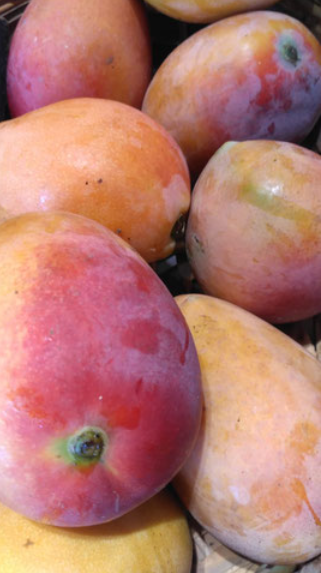
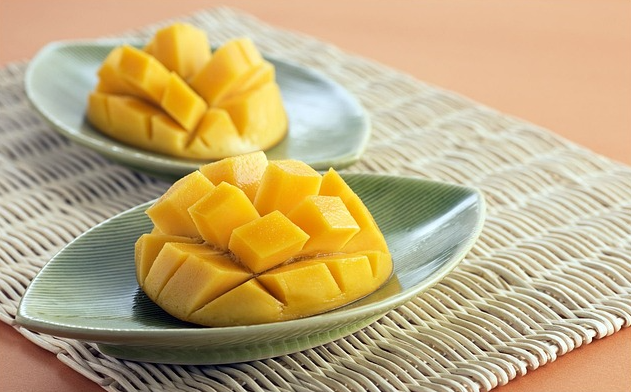
Shelly mango is an orange fruit, medium-sized, blessed with a deep sweet taste, and unlike many varieties, it has no fibrous texture. As mentioned, this year it also ripened early – so simply enjoy it.