If you are among the veteran readers of this column, you already know that the kiwi, which is perceived by the public as a New Zealand national symbol, is actually the national fruit of China, where its wild varieties grow and where it was domesticated long before the Christian calendar began.
In fact, kiwi arrived in New Zealand only during the twentieth century and became identified with New Zealanders only during World War II when the fruit received the nickname 'kiwi' (the nickname by which soldiers from the New Zealand Expeditionary Force were known). This story teaches us the power of 'branding'. For most of the world, the fact that no one in New Zealand encountered the fruit now known as 'kiwi' before 1900 does not prevent most of the world and their spouses from crowning the fruit as New Zealand's.
Naturally, those who are most bothered by this matter are the Chinese. After all, they have a good case; they were the ones who domesticated the fruit, and they are the source of all kiwi fruits in the world, regardless of whether it is kiwi growing in New Zealand, South Africa, or an organic orchard in the Land of Israel.
In fact, since the 1950s, a kind of arms race, or 'kiwi war', has opened between China and New Zealand. In this case, the competition definitely served the world. The kiwi, which outside China was almost unknown, became thanks to the New Zealanders (and mainly the Chinese reaction to them) something encountered in every grocery store on the globe.
So what exactly did the Chinese do? They began developing new varieties adapted to Western taste, and during the twentieth century, kiwi became sweeter and more resistant to cultivation in changing climate conditions – almost all these varieties are Chinese varieties.
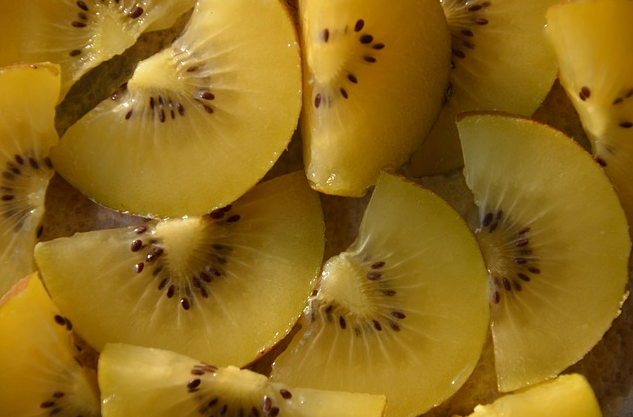
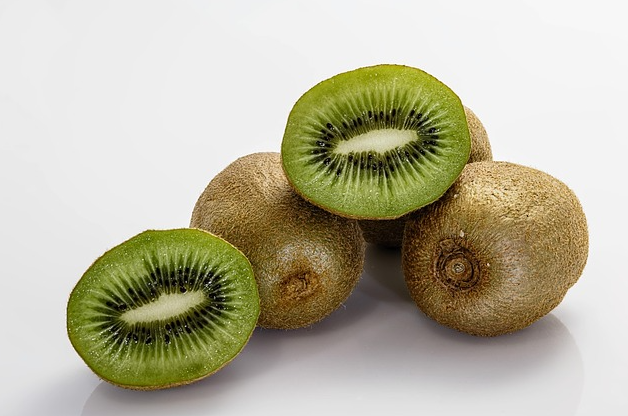
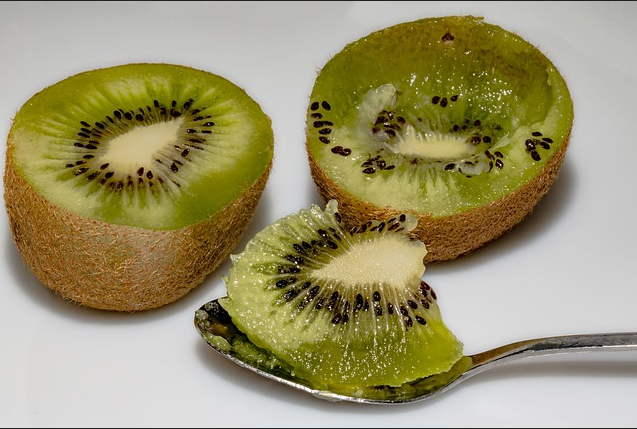
Can we declare 'the Chinese won the war'? Not exactly, because in terms of New Zealand's contribution to the kiwi ecosystem, it proved decisive – yellow kiwi. Throughout most of the history of kiwi as an edible fruit – right up to the 1990s – kiwi was kiwi, meaning brown and hairy on the outside and green on the inside.
Truth be told, a great fruit with no reason to complain. What could be better? The answer: yellow kiwi. In the early seventies, the New Zealanders established their version of the Volcanic Institute. Unsurprisingly, kiwi was one of the crops that most interested the New Zealanders – because of the arms race with China.
It took them almost two decades, but in 1991 they released the Sungold variety to the world. A variety of kiwis, smooth and golden on the outside and yellow on the inside. Does the fact that the fruit flesh is yellow make it more delicious?
Well, you might be surprised to hear, but there are several psychological experiments that testify to this. At one time, a psychological test was conducted in which people were asked to taste two types of butter. In fact, it was exactly the same butter, only on one plate was butter colored with a tasteless green pigment. People were asked to taste and rate which butter was more delicious – the results were significant.
The regular butter, in yellow color, was chosen as more delicious. One could argue this is a matter of context and familiarity; I think it is also the color. Green is perceived as fresh and refreshing; yellow is perceived as more delicious. But forget it, regardless of color, Sungold yellow kiwi excels in high sweetness and juicy texture. So do not give it up this week!