There is something deceptive about citrus fruits, and despite being common and beloved, the roots of many of them are shrouded in mystery. We are accustomed to the fact that cultivated fruits and vegetables are the result of wild varieties that were domesticated, but in the case of most citrus fruits, this is not really the case.
Spoiler: there are no wild varieties of orange, grapefruit, or lemon. In fact, most citrus fruits we consume are the result of hybridization. That is, the handiwork of humans who actively crossed related species. Some of those hybridizations, such as the lemon, occurred many hundreds of years ago; others, such as grapefruit, happened only during the 19th century.
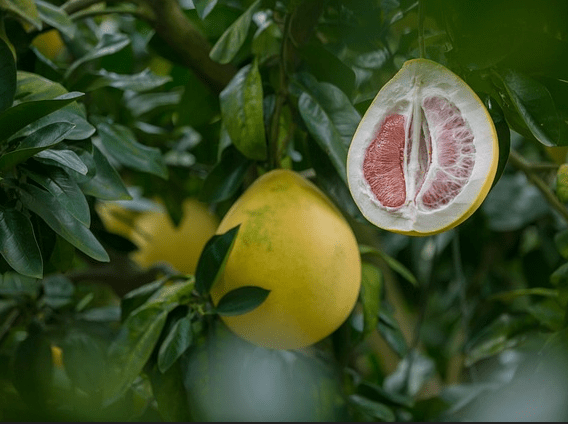
So where did they come from? Generally, the origin of most citrus fruits is in Southeast Asia (there is also a close subfamily found in Australia, but they are less relevant to the citrus fruits we know today in Israel), with five known wild varieties including pomelo, mandarin, and etrog.
From the China region, they reached the Iranian plateau, with the ancient ancestor of citrus fruits in our region being the etrog, which became very popular and thanks to the Persian conquest arrived in the Land of Israel already in the fifth century BCE (at Ramat Rahel, a palace of a Persian nobleman from the fifth century BCE was excavated, and remains of an ancient etrog orchard were discovered). Today, most of us know the etrog from the ritual context of the Four Species. But we must remember that it entered the ritual canon precisely because it was a very useful fruit.
The thick peel, which today is considered a nuisance, was a significant asset before the invention of refrigeration that allowed the etrog to last a long time after picking and made it a fruit that was easy and convenient to trade. Both lemon and lime apparently were born from hybridizations of etrogs, with lime apparently being even older than lemon.
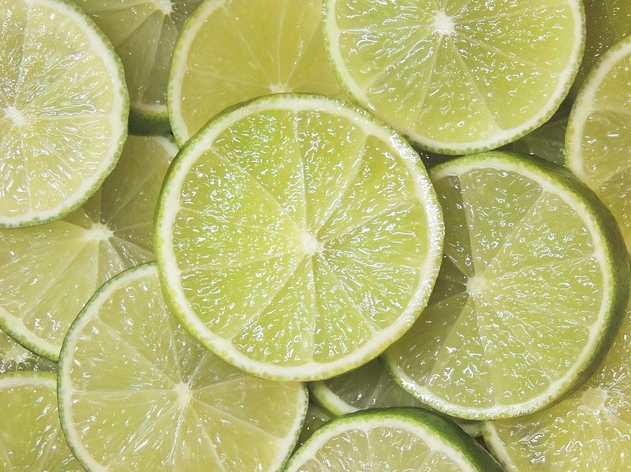
If etrog has been growing here for 2,500 years, lemon and lime arrived here in the tenth century CE through the Arabs and have been growing here since (and later also pushed aside the etrog). So what exactly is lime and how is it different from lemon?
Well, despite the similarity and despite both fruits being rich in vitamin C, these are different fruits. Yes, let us settle this once and for all – lime is not a variety of small green lemon, but a completely different fruit.
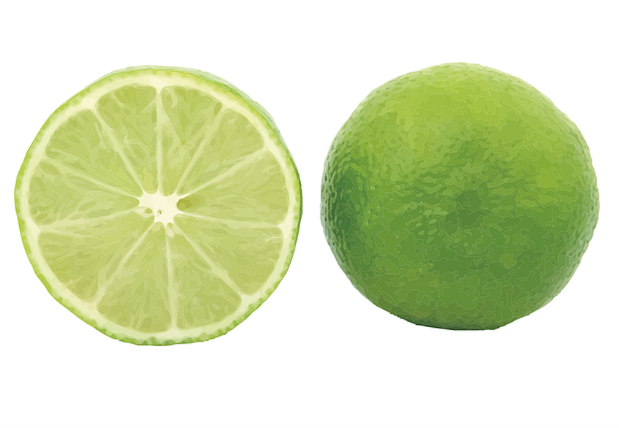
So we mentioned size; lime fruits are small relative to lemon. To this we add that the lime shape is more rounded (while most lemons are oval), and its peel is much thinner. We will soon talk about taste and smell, but first there is the matter of color. So everyone knows that lemon is yellow while lime is green, the thing is this is not exactly correct.
Lime is green because it is customary to pick it before it ripens. But if you let lime ripen on the tree, its peel will turn yellow like lemon. By the way, I have tasted lime that ripened and turned yellow, and it is excellent.
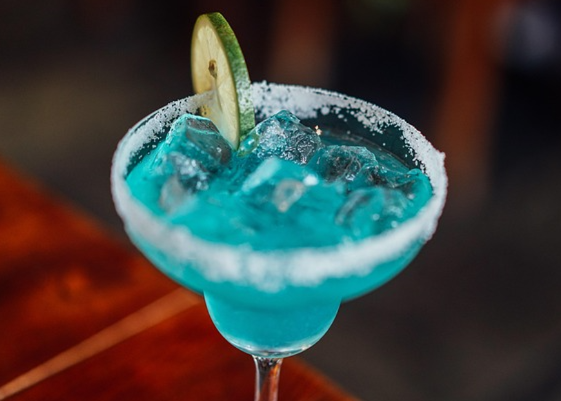
In any case, the practice and standard for growing lime is to pick and market it while it is still green. This leads us to the taste and smell category. In principle, lime has a sweeter taste relative to lemon and especially a deeper, richer, and fresher aroma.
Therefore, it is so popular in cocktails – it will also usually contain more juice and squeeze much more easily. So why do we encounter more lemons? Simply: it is harder to grow lime; the plant is more delicate and sensitive, while lemon is much more resilient and forgiving to growers. On the other hand, we in the garden have always known how to locate excellent farmers who are not afraid of challenges, and lime season is currently at its peak – so simply enjoy it.