One of the ways you can recognize a crop deeply rooted in a place or culture is by the echoes it leaves in the language. Ancient plants leave behind ancient words. The date palm has been present in Hebrew since biblical times, and in its case, there is no confusion.
Classical Jewish texts are filled with terms tied specifically to this tree. In addition to the ancient word tamar, which refers both to the tree and its fruit (and eventually became a popular Hebrew name), we also have kapot (the special palm fronds), lulav, gedid (a word unique to date harvesting), and sansanim another old Hebrew term, used almost exclusively in connection with dates. Let us pause on that last one.
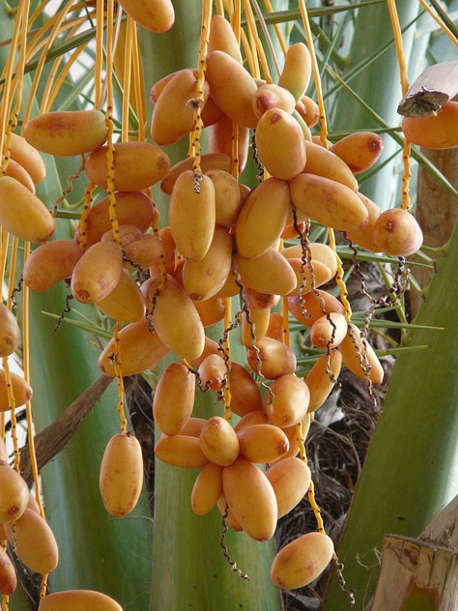
If you are scratching your head thinking “Sansa what?” no, not a character from Game of Thrones. A sansan is the branch that carries the date fruit, and it was given this special name. For example, in Song of Songs 7:9: “I said, I will climb the palm tree, I will grasp its sansanim.” Why bring this up? Because fresh dates, especially the yellow “wet” varieties, are best harvested and kept right on the cluster on the sansanim.
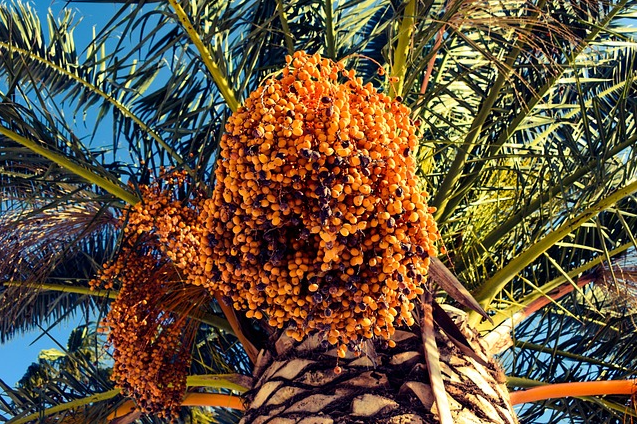
And yes, you guessed it: this week in the garden, we have clusters of organic Barhi dates. Do not pass them up. The date has been native to this land for thousands of years, but at some point in the late Middle Ages, it disappeared from the region.
The reasons are not entirely clear, perhaps a climate shift coinciding with local economic changes. What we do know is that Judean dates, considered in Roman and Byzantine times to be the best in the world, gave way to other regions, likely in what is now Iraq.
For centuries, dates vanished from the land. So when the pioneers of Degania, the first kibbutz, established the first Zionist date orchard in 1927, they brought cuttings from Egypt. And in the 1960s, as Israel’s date industry began to take shape, much of it was based on cuttings smuggled from Iraq by an agricultural pioneer named Ben-Zion Israeli.
Among the varieties he brought was the Barhi date. Unlike most dates, which are eaten fully ripened and dried, Barhi is a “wet” date meant to be eaten fresh.
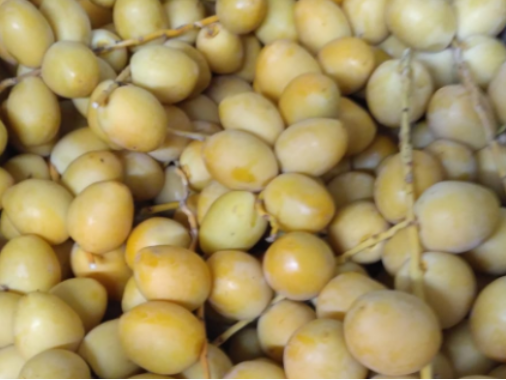
Fresh Barhi dates are bright yellow (though some wet varieties can be reddish-brown). They are small, round, and, as mentioned, are typically sold on their clusters.
In recent years, Barhi has also been found to be delicious in dried form, and today you can find them both as fresh clusters and in the familiar syrupy brown state. But right now, it is all about the fresh ones. And if you have never tried a Barhi date straight from the cluster, I highly recommend it. Even better: pop the cluster into the freezer for an hour, then take it out for a wonderfully refreshing summer treat.