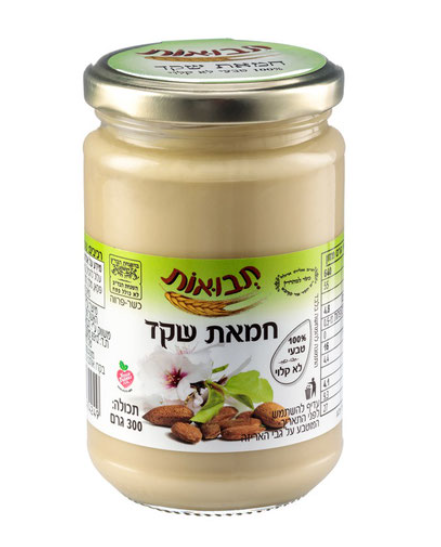
Every so often, I like to step away from fruits and vegetables and dedicate this column to a natural, organic product you’ll also find in the garden. This time, it’s something less familiar: almond butter.
We have met almonds here before. As you may recall, the almond tree belongs to the rose family and is one of the earliest, most picturesque examples of how humans shaped wild plants into food crops through artificial selection. Wild almonds, the direct ancestor of today’s cultivated variety, were bitter, because they contained a compound called amygdalin, which, when broken down, turns into cyanide.
Yes, that cyanide, the infamous poison with the almond scent. But here is the twist: in nature, mutations happen. Among wild almonds, every so often a tree would sprout without amygdalin, meaning its fruit was not bitter.
Even when our ancestors were still hunter-gatherers in the Caucasus mountains (the almond’s original home), they likely knew of these rare sweet almond trees and visited them in season. Later, when humans discovered they could plant and farm for themselves, these rare trees became the foundation for cultivation. By repeatedly selecting and planting sweet almonds, farmers developed a stable, reliable variety that produced sweet fruit.
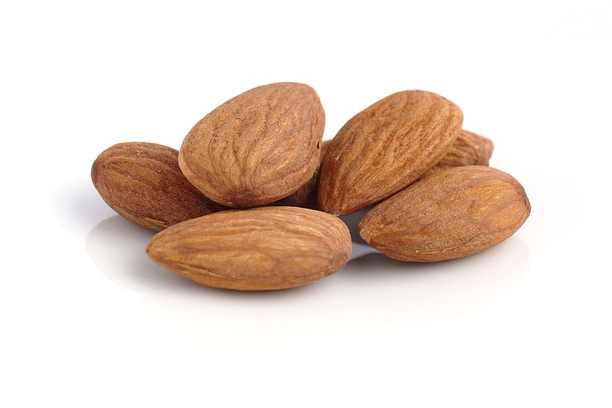
That was a very long time ago, and for thousands of years now, we have enjoyed sweet almonds. They can be eaten fresh, dried, distilled into liqueurs, turned into syrups, or processed into the confection we know as marzipan. But there is another option: take fresh almonds and grind them into a rich, buttery paste – almond butter.
In principle, it is similar to the well-known peanut butter. But while peanut butter is often loaded with sugar, calories, and fats, almond butter is its healthier, more refined cousin. That’s not to say it contains no fat, on the contrary, the creamy texture depends on the natural oils in almonds. But these are primarily the “good” fats, the kind nutritionists love.
The sweetness is there, but it’s subtle. Almond butter is also rich in vitamin E, plant-based protein, and dietary fiber, making it a natural energy snack.
And when I say natural, I mean it. There are many versions on the market, some with all sorts of additives. Personally, I recommend the purest kind, just fresh organic almonds, cold-pressed. Trust me, you can taste the difference.
What can you do with it? Anything you like. Add it to a smoothie, use it as a base for cookies, fill a croissant with it, or simply spread it on a slice of fresh challah. Close your eyes and hope the new year will be just a little sweeter.