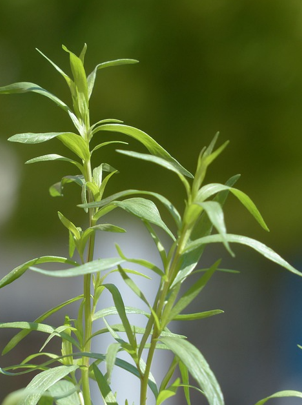
Every now and then, I manage to surprise myself. This morning, when I lifted the fresh bundle of tarragon from the box and inhaled its sweet, delicate anise aroma, I had one of those moments. Suddenly it hit me: How on earth have I never dedicated a column to tarragon?
True, tarragon is not the most common visitor in our organic harvest, but it is not exactly rare either. And now that it is here, it is absolutely worth celebrating because if you care about good cooking, tarragon is not just another herb. In many ways, it is a category of its own. We will get to that, but first: what is tarragon?
Tarragon is a perennial herb whose wild varieties grow across Europe, North America, and parts of Asia. It even has a Hebrew name – la’anah drakonit (roughly “dragon wormwood”). I will be honest: I am not a fan of that name. The “dragon” part is charming and hints at its dramatic flavor, but “wormwood”?
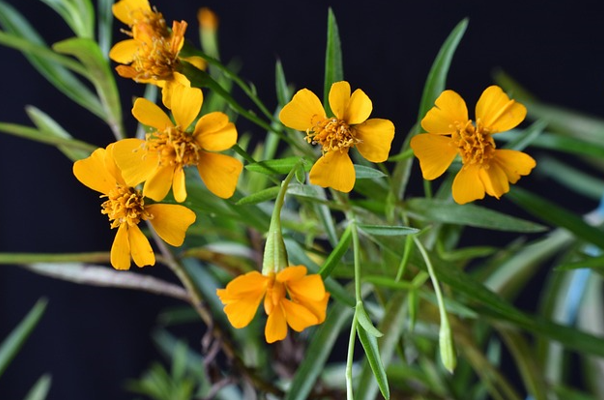
Yes, botanically speaking, tarragon belongs to the wormwood family, but linguistically, la’anah immediately evokes bitterness and tarragon is not a bitter herb. Quite the opposite: it has a noticeable sweetness. And even that is not its dominant flavor. Its most prominent note, wonderfully, unmistakably is anise.
We should pause here because calling anise just a “flavor” does not do it justice. Anise is both taste and aroma- distinct, sweet, refreshing, and instantly recognizable (think licorice). It is a profile that is hard to pin down in Hebrew, but no matter: anise says it all.
Tarragon is not the only plant blessed with this anise character, but it is not a common trait. Only a handful of unrelated botanical families produce it. The best-known example is the anise plant itself (from the Apiaceae family), whose seeds are used to flavor arak. Another is fennel also Apiaceae which I have written about before.
You will also find anise notes in the star anise tree of Southeast Asia, and yes, in some species of wormwood tarragon among them.
Why does this matter? Because it explains why, despite sharing the “anise” umbrella, fennel, and tarragon taste different. These are the subtle distinctions the nuances that led me to crown tarragon “king of the herbs” in the first place.
Botanically humble or not, tarragon hangs comfortably with the culinary giants of French haute cuisine. It is a key ingredient in the classic herbes de Provence blend and features in several iconic French sauces and dishes.
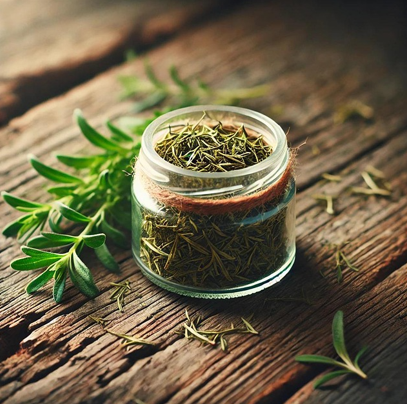
Despite its dominant anise character, tarragon is surprisingly gentle, less overpowering, more refined, and notably sweeter than many expect. And unlike certain herbs that shine only when cooked, fresh tarragon is delicious as-is. It is also rich in antioxidants and minerals, and is traditionally considered anti-inflammatory, calming, and appetite-stimulating.
And now, having thoroughly inspired myself and given that it is a cold winter day with tarragon in the box and fresh fish in the fridge, I am going to step away for a few hours to improvise a French-style fish stew loaded with tarragon.
Bon appétit.