
“Pull the carrot, pull the carrot
there’s no carrot quite like it!”
From the children’s song Eliezer and the Carrot, lyrics by Levin Kipnis
Why open with that quote? Partly because I felt like it (and I may just adopt this whole “quote-in-the-opening” thing as a concept), but mostly because the line is true: there really is no vegetable quite like the carrot.
Sure, the song refers to one legendary, oversized carrot, but even conceptually, among the classic root vegetables (let us set tubers aside), the carrot stands alone.
After all, what other root can you pull straight from the earth, bite into with joy, and be greeted by a natural sweetness? There is simply nothing like a carrot. Which is why I keep coming back to it also because, unfortunately, I have not yet mastered the art of inventing new fruits and vegetables.
Carrots belong to the Apiaceae family, and their wild ancestors originated around Afghanistan. The wild carrot that humans first adopted as food looked nothing like the carrot we know today – not in shape, not in color, and certainly not in flavor.
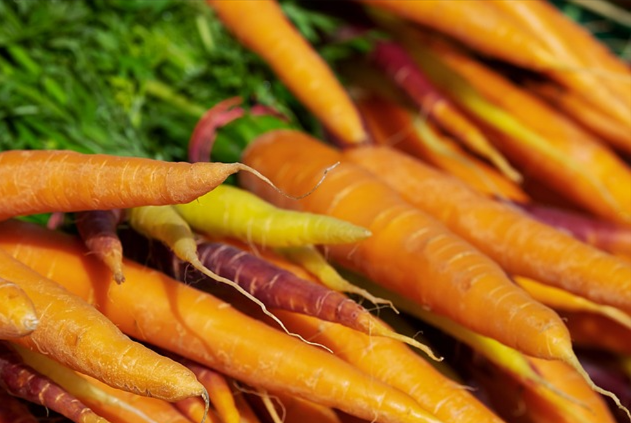
Yes, the wild carrot was bitter. And that should not surprise us, roots are expected to be bitter. Today’s carrot is the rare, sweet exception. Despite the bitterness, its special aroma made it appealing, and it even appears in one of the oldest known cookbooks, attributed to Apicius of Rome (though it is unclear whether this was the Apicius of the first century CE or of the 5th). He described the carrot as a bitter medicinal vegetable that becomes pleasant after roasting.
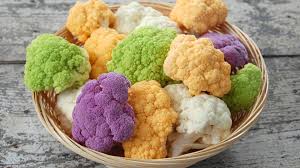
By the Middle Ages, carrots had already become longer and sweeter but still came in a spectrum of colors: white, purple, red. The iconic orange carrot was still rare.
So how did the carrot become synonymous with orange?
True, in the garden we also grow heirloom carrots in many colors, but we always include the classic orange ones as well. And for most people, carrot = orange.
For that, we can thank the Dutch.
In the 17th century, the Dutch were world champions in trade, science, economy, and innovation. They invented the stock exchange and led Europe in agriculture. They were famously obsessed with botanical development (think tulip mania).
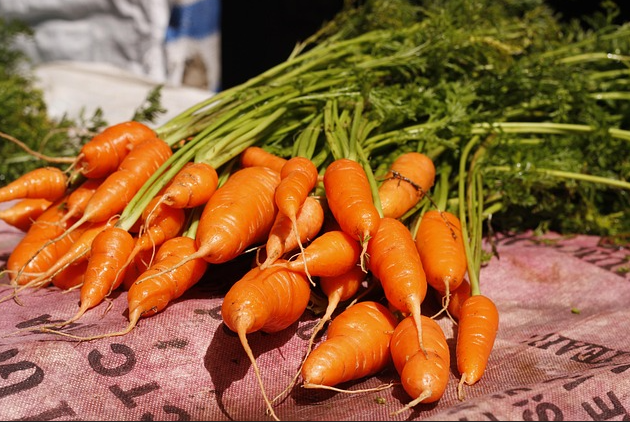
Around that time, Dutch botanists developed the orange carrot. Why orange? First, this variety was particularly sweet. But the color itself also honored the House of Orange, the ruling dynasty that led the Dutch War of Independence and later became the royal family. It was a national tribute.
Thanks to Dutch trade power, the orange carrot spread across the world and, by the 18th century, replaced the other varieties becoming the standard carrot: the bright, sweet, wonderful orange root we all love.