Australia may be one of the planet’s continents (yes, I count the Americas as one, and Antarctica as a block of ice), but let’s be honest: unless you’re into kangaroo steak, it hasn’t contributed much to the global culinary repertoire. Sadly, unlike koalas, we humans can’t survive on a diet of eucalyptus leaves.
There are a few exceptions to this rule (one day I will find the right moment to tell you about the legendary Vegemite), but when it comes to agricultural crops, there’s no doubt that the crown jewel on this very short list belongs, rightfully so to the macadamia nut.
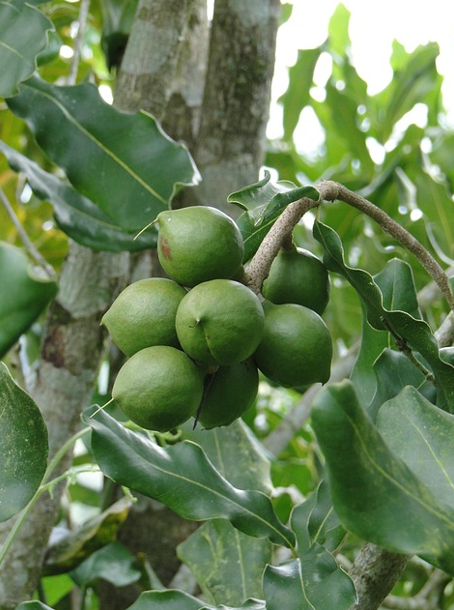
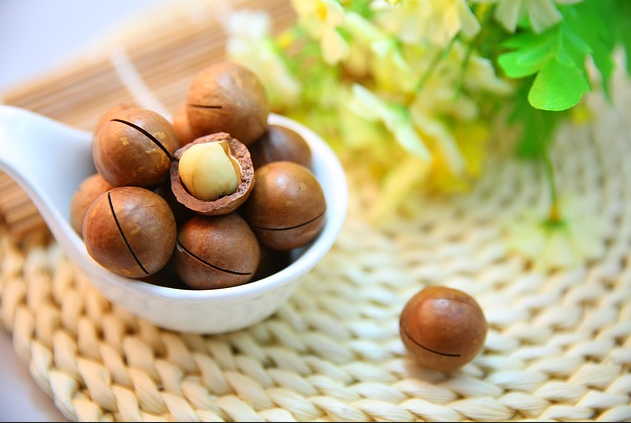
“Macadamia” is a general name that refers to eight species of trees from the same family, native to Australia and parts of Indonesia. These trees produce flowers that develop into nuts with extremely hard shells and a rich, fatty “meat” inside. The name macadamia was given in the 19th century, in honor of the botanist Dr. John Macadam, the first Western researcher to describe and classify them.
Of course, Australia’s Indigenous peoples were well acquainted with these trees thousands of years before John Macadam wandered the Australian bush in a European hat and mustache. After all, Aboriginal Australians are people like us, not koalas and they couldn’t eat eucalyptus leaves either. They knew all eight species and made use of their nuts.
The modern macadamia nut, the one that became an agricultural crop around the world is essentially the result of crossbreeding two of those species (Macadamia integrifolia and Macadamia tetraphylla). Why those two? Because the other species contain toxic glycosides.
The Aboriginal peoples, unwilling to give up such a valuable resource, developed soaking methods that neutralized those toxins. But when modern agriculture entered the picture, the simpler choice was to focus on the naturally non-toxic species.
This is a good moment to say it plainly: macadamia is a phenomenal nut. It stands shoulder to shoulder with the great nuts of the Old World and many would argue it surpasses them. It has a rich, distinctive flavor and is packed with essential fatty acids as well as high-quality protein. Add to that its excellent shelf life (it can keep for up to two years after harvest with little effort) and its suitability for cultivation in temperate climates, and it’s no surprise that macadamia has become Australia’s most prominent agricultural ambassador. Today it’s grown in North America, South America, Africa, Asia and even in Israel.
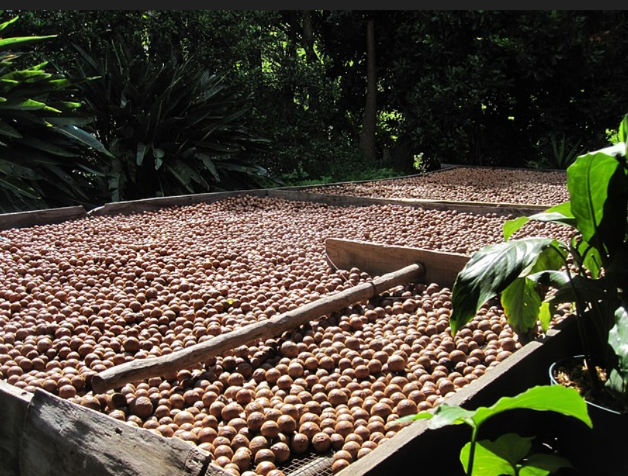
The first macadamia orchards in Israel were planted in the 1950s. Botanically speaking, it was a success story: the trees adapted well. But modern agriculture has its own dynamics. Macadamia trees take nearly a decade to become truly productive (and can continue producing well for over a hundred years). Their extremely hard shells posed commercial challenges, and more immediately profitable crops like avocado, gradually replaced macadamia orchards.
The good news is that thanks to a few passionate, slightly obsessive growers over the past decade, macadamia cultivation has made a quiet comeback. The results are already noticeable in the field and this week, you can also find organic, delicious macadamia nuts here with us in the garden.