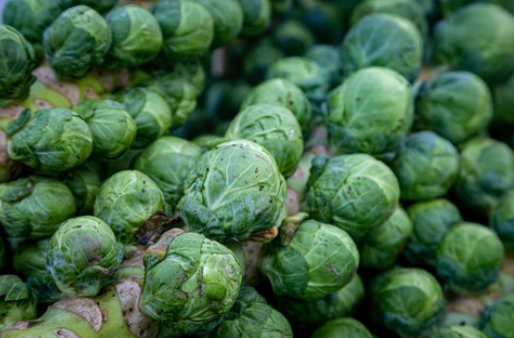
What do cruciferous vegetables have to do with Belgian chocolate? Absolutely nothing. It is a purely personal association but I stand by it. Because if wild cabbage has a sweetest descendant (in many ways), it is undoubtedly the Brussels sprout.
A quick reminder: wild cabbage is the plant from which most European cruciferous vegetables were domesticated cabbage, cauliflower, broccoli, kohlrabi, and Brussels sprouts, which are far more than just a cute little vegetable.
Why Belgian? There is evidence that even the Romans (yes, them again) developed dwarf cabbage varieties. Frankly, I would be surprised if they didn’t. But in the 6th century, the Western Roman Empire collapsed. The Byzantine Empire survived and rightfully saw itself as Rome’s successor, yet its cultural and geographic center shifted eastward, Latin gave way to Greek, and many Western agricultural traditions including vegetable varieties were lost or forgotten.
From the 6th to the 9th century, Europe was immersed in fragmentation and upheaval. Only when Charlemagne and the Catholic Church forged an early version of a “European Union” in the 8th century did some form of order begin to emerge.
Calling medieval Europe “orderly” is, admittedly, generous. Charlemagne’s empire soon fractured into dozens of kingdoms and duchies that would feud for centuries. But a structural pattern did take shape: cooperation between the Church and the aristocracy gradually turned Europe into a more urban and commercially dynamic space for its time. And that brings us to Belgium.
Belgium, of course, did not exist in the Middle Ages (it was officially established only in 1831, borrowing its name from a Gallic tribe Julius Caesar wiped out in the 1st century BCE). But the region that would later become Belgium and the Netherlands known as the Low Countries, emerged from the 11th century onward as something akin to the Silicon Valley of the Middle Ages.
Control of the region shifted between the Duchy of Burgundy, the Holy Roman Empire, and Spain. Yet it became a global center of textile production, metalwork, and trade. Cities like Bruges, Ghent, and especially Brussels ranked among Europe’s wealthiest urban hubs.
By the early 13th century, Brussels had become one of the richest metropolises in the world and that prosperity expressed itself in many ways, including culinary refinement. To this day, the English name Brussels sprouts reflects this historical trajectory perfectly.
The earliest written references to the vegetable come from the areas that later became Belgium. And it is worth remembering that by the Middle Ages, an urban bourgeois class had already emerged especially in cities like Brussels, people who desired good living and good food.
Before the discovery of the Americas (and the arrival of potatoes, tomatoes, pumpkins, peppers, and more), the European vegetable pantry was limited. Root vegetables and cabbage carried much of the burden.
No need to elaborate on cabbage’s significant role in northern European cuisine. But those with means who could afford meat and fish wanted something more refined. In terms of food engineering and varietal development, the Low Countries were ahead of their time. Later, after the northern provinces (the Netherlands) split from the southern (Belgium), the Dutch would become world champions of crop breeding (among other things, they gave us the orange carrot). But in the 13th and 14th centuries, it was the wealthy southern cities that led the way.
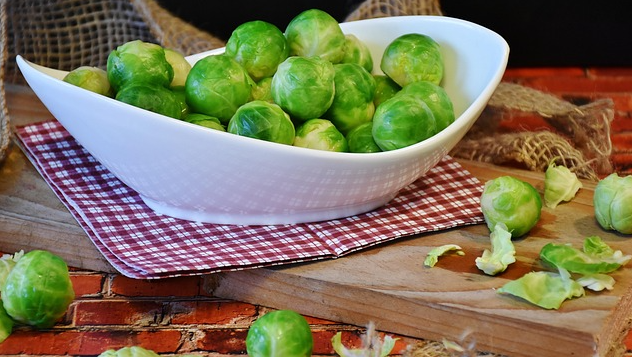
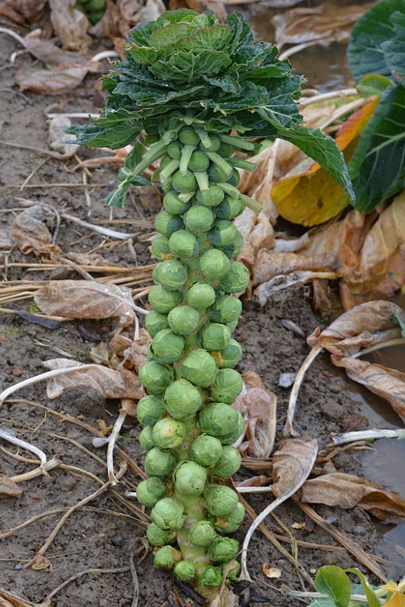
Given the absence of New World root vegetables, an innovation like Brussels sprouts was a royal delicacy (and a favorite of affluent textile merchants). Unlike large cabbage heads that must be dismantled leaf by leaf, Brussels sprouts is naturally bitesize. Compared to their oversized ancestor, they are sweeter, less fibrous, and offer a perfect balance of tenderness and crunch, exactly the kind of vegetable you would want in a winter stew or creamy side dish.
In the late Middle Ages, when it came to trendy and innovative vegetables, Brussels sprouts was king.
Let us remember something simple: regular cabbage is easier to grow and far more calorie-efficient (there is simply more of it). Brussels sprouts are a more complex crop, and in their early decades of cultivation, they were likely destined for Europe’s elite.
Today, the vegetable is much more accessible. But the principle has not changed: it is still easier and more cost-effective to grow regular cabbage. And in our modern, convenience-driven world, most Brussels sprouts end up in the frozen food industry. Frozen Brussels sprouts are fine.
But fresh Brussels sprouts? That is a delicacy with a distinctly Belgian aroma and this week they are visiting us in the garden.