Rosh Hashanah may already be behind us, but since you have probably finished the honey at home along with the apples, this is a perfect opportunity to talk about one of nature’s little miracles: honey.
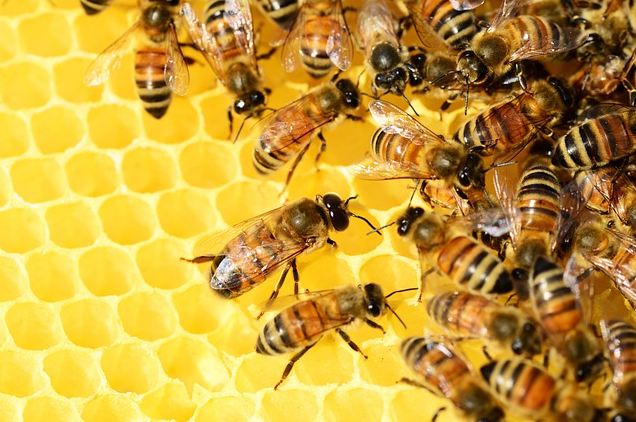
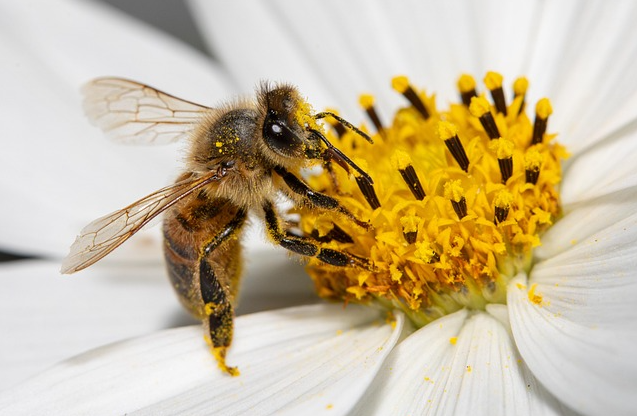
Honey is a relatively rare example of a product that is naturally processed as part of the evolution of a fascinating insect called the honeybee. Honeybees are a small group within the bee family. There are hundreds of types of bees, but only seven species belong to the group we call honeybees, and they were here long before us.
Honey itself is essentially an ingenious food solution. At its core is flower nectar, which is collected and processed by enzymes inside the bee’s body.
When humans appeared and began living as hunter-gatherers, wild beehives quickly became a resource worth pursuing, despite the obvious risks involved. In prehistoric times, if you managed to get your hands on a honeycomb, you had truly hit the jackpot.
At the end of the day, honey is mostly sugar, and before processed sugar appeared, it was one of the few concentrated sweeteners available. At some point at the dawn of history, bees were domesticated. In other words, humans learned how to raise bees and harvest their honey.
The current assumption is that this first happened in ancient Egypt, where archaeological evidence shows that people were keeping bees and harvesting honey by the middle of the third millennium BCE, around 4,500 years ago.
Throughout most of human history, people across the world and in many diverse cultures kept bees for honey. The Land of Israel was no exception. Archaeological evidence suggests that a honey industry existed here as far back as the Canaanite period. It is no coincidence that the Torah famously describes Canaan as “a land flowing with milk and honey.”
Beekeeping never disappeared from this region, although in recent centuries it became more of a specialized side occupation practiced by a small number of local farmers. Toward the end of the 19th century, with the establishment of the first Zionist agricultural colonies, the first attempts at modern beekeeping began in the Land of Israel.
The industry really gained momentum after the First World War, and in 1926 the Israel Beekeepers Association was established, exactly one hundred years ago.
The story of the wonderful organic honey waiting for you in the garden today actually begins even earlier. I am not entirely sure whether the Ein Harod apiary is the oldest in Israel, although it very well may be, but it was established in 1922 and has been a leading name in Israeli honey production for more than a century.
Ein Harod itself is one of those magical places in Israel, a site connected to several historical events stretching all the way back to biblical times. According to the Bible, this is where the judge Gideon tested his warriors before battle.
Centuries later, in September 1260, the area was also the setting for the Battle of Ain Jalut, the Arabic name for Ein Harod. There, the Mamluk army stopped an invading Mongol force that threatened to sweep across the Middle East and North Africa. It was the first time a major Mongol force had suffered a decisive defeat in battle, and the consequences were far-reaching.
What does any of this have to do with honey and bees?
Absolutely nothing.
But it has everything to do with Ein Harod, a remarkable place where remarkable honey has been produced for more than a hundred years, including the wonderful organic range waiting for you here in the garden.