This column has come to the turnip’s defense more than once. This humble root kept Europe fed for more than two thousand years, yet somehow it never enjoyed particularly good PR. When exciting new root vegetables like potatoes and sweet potatoes arrived in Europe from the Americas in the 16th century, the turnip was pushed aside and branded as food for the poor, or in some places, animal feed.
As we know, you should not pay too much attention to branding. And besides, “poor people’s food” is often some of the tastiest food around. Turnips are highly nutritious, with around thirty calories per 100 grams, which is actually quite respectable in the vegetable world. I also insist that when treated properly, and it really is not complicated, turnips are delicious and remarkably versatile. You can eat them fresh or prepare them in all kinds of ways, including roasting, frying, boiling, and steaming.
The turnip is an annual plant from the cruciferous family, just like cabbage and radish, and it has been at home in the Mediterranean region for at least 3,000 years.
As with most vegetables, there are dozens of turnip varieties. Most of the differences between them are relatively minor and not especially relevant to the person eating them. They matter much more to farmers, since different varieties are often better suited to specific soils, growing conditions, or climates.
This time, however, we have a turnip with such distinctive qualities that it fully deserves a column of its own. I am talking about the sweet white turnip. When we close our eyes and picture a turnip, and yes, I know this probably does not happen very often, but stay with me, we usually imagine a large, purplish root with a somewhat bulbous shape.
The turnip waiting for you in this week’s box is something quite different. In fact, at first glance you might not even recognize it as a turnip.
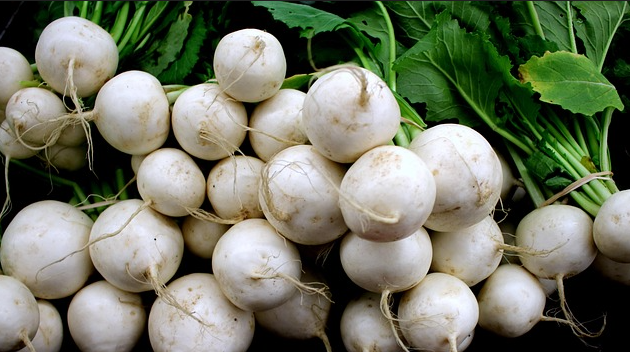
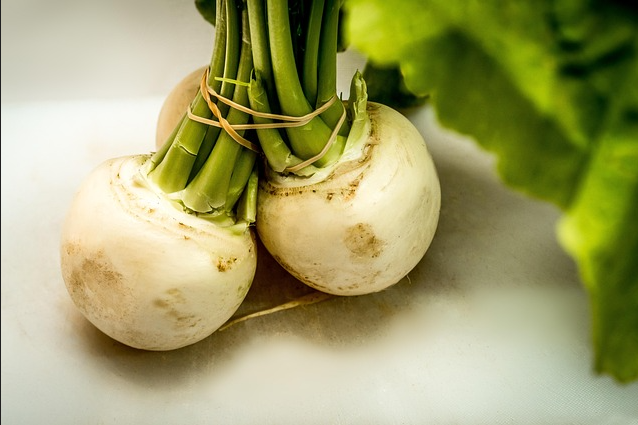
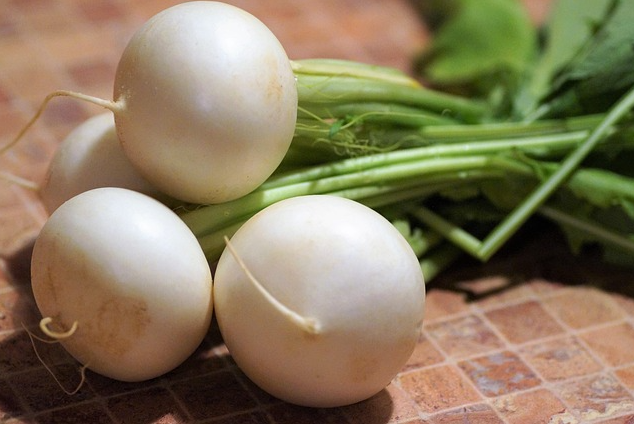
Unlike a regular turnip, the sweet white turnip is much smaller and rounder, almost like a ping-pong ball. And the color? You can probably guess. White.
But what about the flavor? Is a sweet white turnip actually sweet?
Well, everything is relative. Compared with the slightly bitter flavor of a regular turnip, it is considerably sweeter. Compared with a sugar cube, probably not. But to my palate, there is definitely a gentle sweetness to it.
And speaking of sugar and turnips, the connection is not as strange as it sounds. Many fruits and vegetables, including root vegetables, contain varying amounts of sugar. In fact, a significant portion of the world’s sugar comes from a close relative of the turnip: the sugar beet.
So no, I am not suggesting you sweeten your tea with a white turnip. But it is absolutely a refreshing alternative to the regular kind.
There is another reason I love this particular turnip. Somehow, whenever it appears, it seems perfectly synchronized with the arrival of autumn, and I always enjoy that.
The sweet white turnips we have this week are so fresh that they come with an extra bonus: the leaves.
Yes, turnips are root vegetables, but when they are this fresh, the leaves are a treat in their own right. I use them a lot like spinach. Give them a quick blanch in boiling water, then a brief sauté in a pan.
A little tip from me: try it and enjoy.