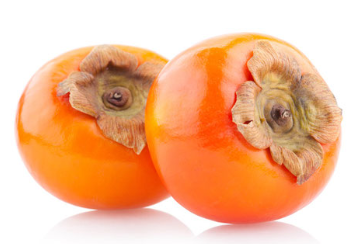
In much of the world, the fruit we know in Hebrew as “afarsemon” goes by its Japanese name. And how do you say persimmon in Japanese? “Kaki.” Yes, given what that sounds like in Hebrew, you can understand why the name never caught on here. The pioneers of modern Hebrew quickly found an alternative, borrowed from Jewish sources.
Afarsemon was the name of a mysterious plant whose identity has never been conclusively established, and which formed the basis of the perfume industry during the Second Temple period. The fruit and tree we know by that name today, however, originated in China. They belong to the ebony family, one of whose characteristics is the presence of a substance called tannin in its fruits. I will come back to that.
Anyway, persimmons have been cultivated in China for at least 2,000 years. From there, they spread to other parts of Asia, including Japan (and I will refrain from mentioning the Japanese name again).
Interestingly, unlike other food crops originating in China, such as citrus fruits, persimmons took a very long time to reach the Middle East and Europe. In fact, a botanical description of the plant was not published in the West until 1780. Which brings us back to the name. Granted, the Hebrew word “afarsemon” was available, but why was it chosen for this particular odd-looking fruit?
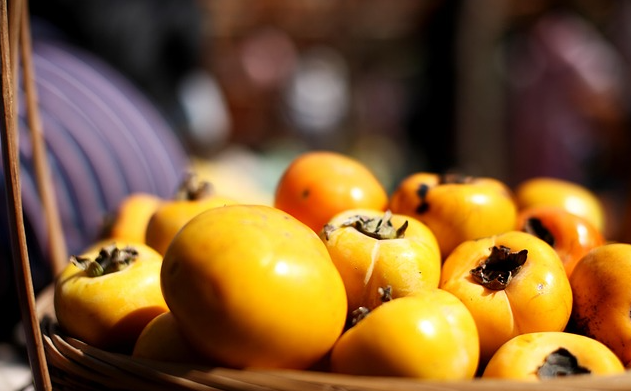
The reason is that, alongside its Japanese name, the fruit is known across much of the world as “persimmon.” The similarity in sound prompted the borrowing of the ancient Hebrew “afarsemon” for the modern fruit. In a twist of linguistic fate, “persimmon” actually comes from North America, borrowed from an Indigenous language.
So how did an Indigenous American name become attached to a fruit from China, which we call by the ancient Hebrew name of an unidentified plant? The plot thickens. The word entered English from the language of the Algonquian people living in what is now Virginia, as early as the seventeenth century, when the first English settlers arrived in the area. And yes, I will spare you my attempt at writing “Algonquian” in Hebrew.
This is interesting because the name entered English before the English-speaking world knew the Chinese fruit. Apparently, in the Indigenous language, it was a general term for fruits that needed to undergo a process before they were good to eat. What does that have to do with the journey of the name?
Remember that I promised to come back to tannin? Tannin, or rather tannins, since we are talking about a whole group of substances, are natural polymers produced by certain fruits. They are powerful antioxidants, but they also have a bitter taste. The bitterness in wine, for example, comes from tannins. Certain fruits that are commonly picked before they are fully ripe need an additional treatment, a process of induced ripening, before they are ready to eat.
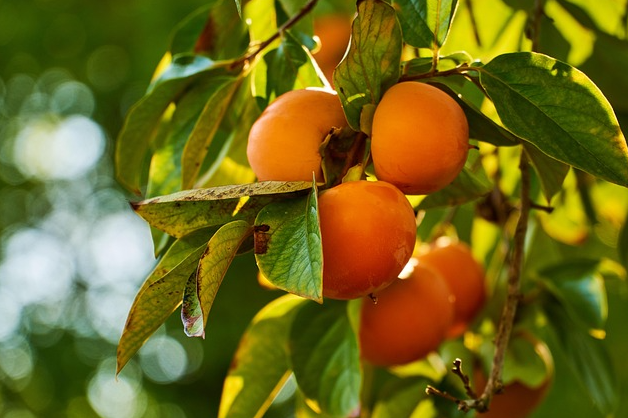
Presumably, the settlers saw Indigenous people treating local fruits in this way, a process described by the Indigenous word that became “persimmon.” When the Chinese fruit became more widespread in Europe in the nineteenth century, the name associated with that process stuck. The people reviving the Hebrew language noticed the similarity between “persimmon” and “afarsemon,” and that is how we ended up with our name.
I have gone on so much about the name that I have barely talked about the fruit itself. Once it arrives, properly ripened and ready to eat, it is hard to beat.
Incidentally, the varieties developed in Israel are considered among the finest in the world, with particularly high sugar levels compared with those grown elsewhere. The organic persimmons waiting for you at the Garden this week share that lovely quality.
And right now, they are as sweet as honey.