I’ve written about this before, but the story of corn is so successful and dramatic that it feels worth returning to it from a similar but slightly different angle.
Why corn? Because no other food crop shows such dominance in our lives, especially considering its humble beginnings. Before the 16th century, no one outside the Americas had ever seen corn. And even those who did know corn knew a plant very different from the one we recognize today.
What do I mean? Corn is one of the most important plants in the food industry. The flour, oil, and sugar produced from it (yes, modern corn contains a great deal of sugar) are everywhere. It’s also a central component in animal feed across the industrialized world.
So in a sense, even when we drink milk, eat eggs, or have schnitzel we are, indirectly, consuming corn. Today, corn is even used to produce fuel substitutes. Some would say: we are made of corn.
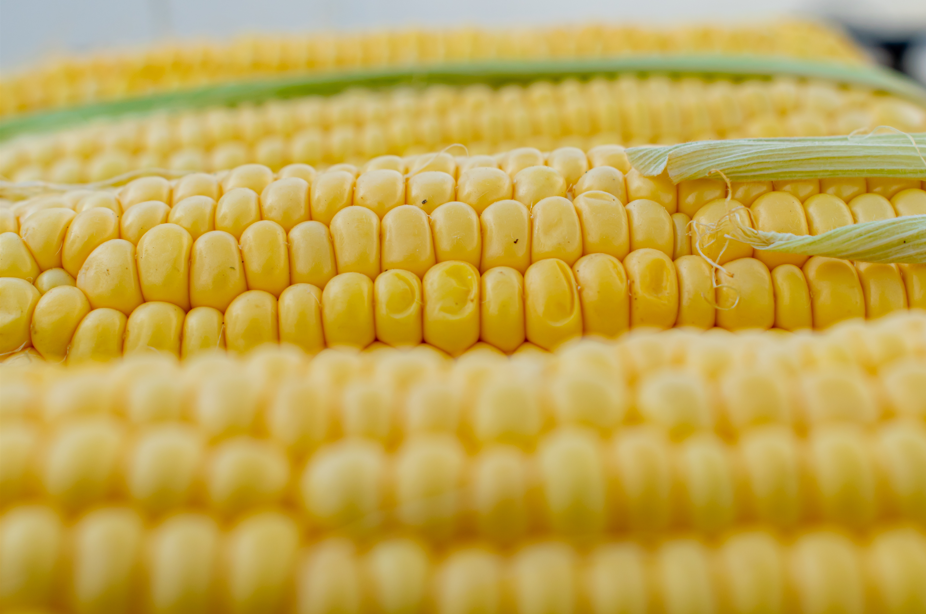
As mentioned, until about 400 years ago, no one outside America had ever seen corn. And the corn humans first knew looked very different from the iconic yellow cob of today. It wasn’t yellow at all, its kernels appeared in a mix of colors: red, blue, black. The cobs were much smaller and far less densely packed.
That said, in parts of the Americas, corn had already been a major domesticated crop for thousands of years. For Indigenous peoples of the Americas, corn played a role much like wheat and barley did in the Old World.
Still, that doesn’t explain how it came to take over the world or how it suddenly became yellow.
Spoiler: those two facts are connected.
When corn reached the Old World after the Spanish conquest of the Americas, it adapted beautifully and became a popular crop around the globe. And like many popular crops, people immediately began trying to improve and refine it.
As mentioned, corn’s wild ancestors and the varieties domesticated in the Americas over nearly 10,000 years had kernels in a wide range of colors. Here and there, yellow kernels also appeared, but only as part of a mixed display. There was no such thing as a fully “yellow” cob.
Those yellow kernels differed from the others not only in color, but also in taste: they were sweeter.
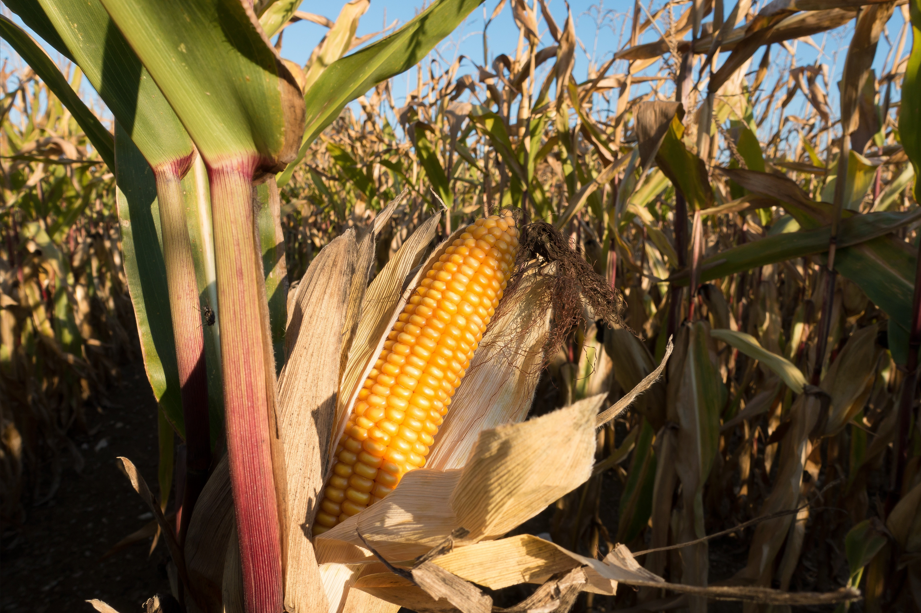
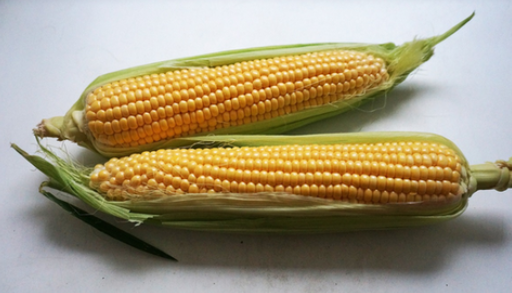
It turns out that the pigments responsible for the yellow color came with a mutation that prevented sugars from breaking down. By the 1860s, varieties made entirely of yellow, sweet kernels had already been developed. And just as the orange carrot and red tomato became the standard, yellow sweet corn eventually became the version we all recognize.
In any case, corn ripens and reaches its peak at the beginning of summer which is exactly where we are now. And this week, we have gorgeous organic cobs that I’ve been waiting for months.
What can you do with them? Almost anything. Add them to salads, soups, fritters the possibilities are endless.
But today, I feel like keeping it simple: dropping them into boiling salted water for a few minutes, then eating the kernels straight from the cob. Because this organic corn really doesn’t need anything else.