If you are an Israeli reader living in Israel, chances are you have stepped on this week’s featured star hundreds of times without even noticing.
We are talking about mulukhiyah. And yes, if that name sounds to you like a well-known Arab dish (and not only Arab Jews from Egypt and North Africa know it well too), but you are also not wrong.
But actually you are. It is a very common mistake.
Because mulukhiyah is not really the name of the plant. It is the name of the famous meat stew from Arab cuisine that is so strongly associated with it. The plant itself is called Corchorus olitorius or edible jute. The dish takes its name from the Arabic mulukhiyah, but strictly speaking, that refers to the stew (which, like any classic stew think goulash has countless variations).
So is there anything you can do with mulukhiyah (the plant) besides making mulukhiyah (the stew)? The answer is yes and we will get to that. But this is also a great opportunity to get to know a delicious local dish that is deeply tied to the plant itself.
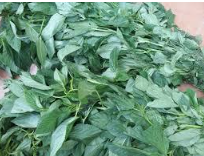
Let us start with the plant. Edible jute is an annual herb from the mallow family. It thrives in warm, humid tropical and subtropical regions like our coastal plain. In fact, right now is exactly its season.
It is a plant with a long stem and tender leaves, the very leaves we are here for. And there is a good chance it is currently catching your eye as it pops up along sidewalks or between paving stones. Yes, this is a native, local plant that humans have been making use of for thousands of years.
Its earliest recorded mentions come from ancient Egypt, where it was used not only as food but also as a raw material for textiles. It was during the second millennium BCE that it first appeared as a food crop.
Interestingly, this happened around the time Egypt was ruled by the Hyksos, a dynasty originally from Canaan that conquered Egypt (a kind of reverse Exodus story). The plant likely appears in biblical contexts as well and was probably a widely foraged herb, much like it still is today in villages across the Galilee and Wadi Ara.
What is clear is that since the Arab conquest, mulukhiyah has been a staple of the regional diet. In fact, Arabic speakers often refer to the plant by the name of the stew mulukhiyah rather than by its botanical name.
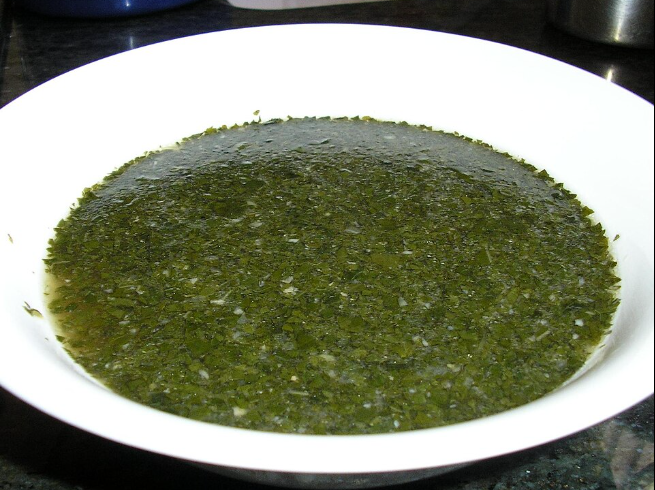
The basic idea of the dish is simple: finely chopped young mulukhiyah leaves are cooked together with meat (there are versions with lamb, beef, chicken, and even rabbit), along with spices such as pepper and coriander seeds.
Although the plant itself has a relatively mild flavor, it releases a subtle mucilage (much gentler than okra), which gives the dish its distinctive texture and creates a rich, flavorful synergy. That is what made mulukhiyah one of the crown jewels of Levantine Arab cuisine.
Which brings us to an interesting twist: the Druze.
The Druze are, after all, a Levantine Arab community, speaking the same dialect of Arabic. But religious and cultural distinctions emerging from historical splits within Islam, led them to adopt certain practices that set them apart. And in one of those curious turns, the Druze decided not to eat mulukhiyah at all.
Lucky for us, we are not bound by that rule.
Because this humble plant, now also cultivated commercially is truly worth discovering. The classic stew (including its vegetarian and vegan versions) works beautifully even in summer. And beyond that, mulukhiyah can be used creatively in a variety of dishes from Japanese-style soups to pasta and even fresh salads.
Sometimes, the most overlooked weed turns out to be the most surprising ingredient.