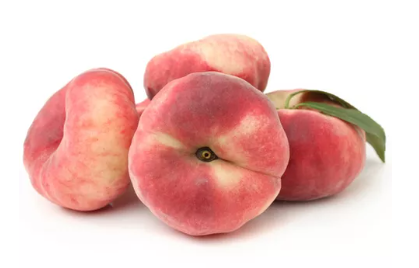
Sometimes I feel that the guiding principle behind naming fruits and vegetables is simply to confuse people. It seems that behind almost every name hides a mistake, a mistranslation, or a complete invention. And things only get worse when it comes to translation because somewhere along the way, a marketing genius decided that calling this fruit “Pita Peach” in Hebrew was somehow a good idea.
I call it a name, but from what I understand it is really more of a nickname, born from an attempt to localize the fruit’s popular North American name: Donut Peach. And just how unsuccessful was that translation?
Well, a donut—that beloved American pastry is sweet, soft, and indulgent. A pita is… well, a pita. I understand that the clever translator focused on the fruit’s flattened shape (just like a donut) and searched for an Israeli flatbread equivalent. Hence: pita.
The problem is that they completely missed the second half of the original comparison, the wonderful sweetness and delightful texture. Because at the end of the day, that is what defines this peach just as much as its unusual shape. And unfortunately, that part got completely lost in translation.
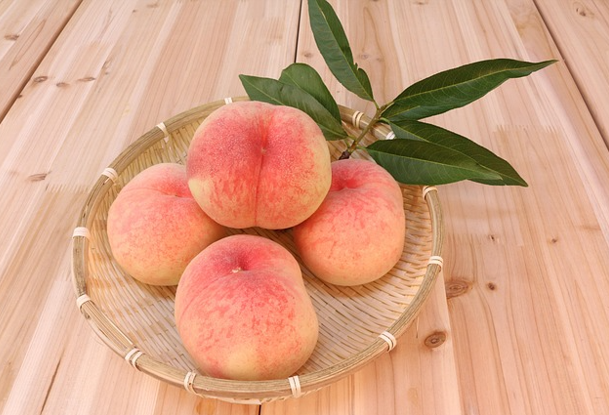
By the way, in North America this variety is also known as the UFO Peach or Flying Saucer Peach which is actually a much better name. It perfectly matches the shape, without creating unfortunate associations with dry bread.
If you thought we were finally done with the debate and could move on to the main course (although in the case of this fruit, dessert feels more appropriate), you will need just a bit more patience. Because even the official and supposedly original name of this variety is rather confusing.
To this day, one of its most common names worldwide is Paraguayo Peach. And where does that come from? Honestly, no one seems entirely sure. Peaches belong to the rose family and originate in Asia regions like China and Persia. Paraguay, on the other hand, had no peaches whatsoever before the late 16th century, when it became part of the Spanish colonial world.
The variety itself almost certainly originated in China. Did it somehow acclimate in Paraguay and spread from there into Europe? That is possible, although I have never managed to fully trace the story. What we do know is that when the fruit gained popularity in the West during the late 19th century, it was already marketed under that name. But its origins are far older.
The earliest reliable written description appears as early as the 11th century, when the Muslim scholar Al-Biruni praised the flavor of a peach he described as being shaped like a katayef, a flattened stuffed pastry common in Arab and Turkish cuisine.
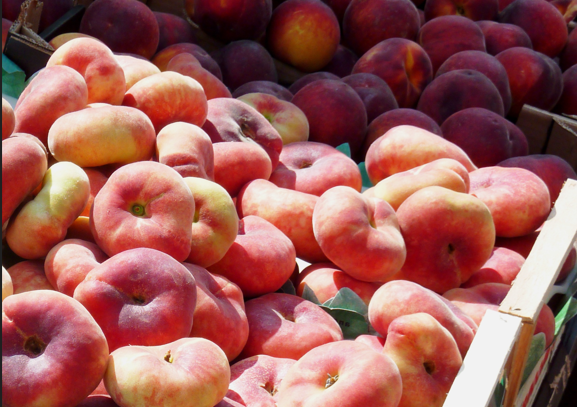
In any case, when this fruit reached Western markets in the 19th century, its unusual shape immediately caught attention but almost always, it won people over with its flavor too. Because quite simply, this is an exceptionally delicious peach.
In Israel, it has been around for several decades. At first it was grown mostly in experimental orchards and breeding programs (and today, Israeli-developed flat peach varieties are sold internationally). But now it is also grown commercially on a regular basis including organic cultivation.
So here is my recommendation: the name Pita Peach may not sound particularly appetizing… but the fruit itself, now perfectly in season, is absolutely wonderful.