One of the phenomena modern agricultures has produced in our globalized world is what I like to call “varietal imperialism.” What do I mean by that? A single variety becomes trendy, wins over consumers and international markets, farmers abandon older varieties, and the fashionable newcomer begins to dominate the field, cannibalizing the market while other varieties are pushed aside or disappear altogether. One of the clearest examples of this phenomenon can be found in Israel’s date industry and more specifically, in the story of the Medjool.
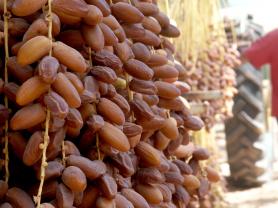
Medjool became trendy for very good reasons. It is a particularly large date, handsome in appearance, and even more impressive once you bite into it: sweet, rich, and wonderfully textured. There is no doubt, it is a fantastic variety.
So what is the problem? Up until about two decades ago, Medjool was just one of roughly ten date varieties grown in Israel. It was indeed considered rightly the most luxurious and desirable date, and its price reflected that both locally and internationally.
Like most of the commercial date varieties grown in Israel, Medjool originated in Iraq and arrived here through the smuggling of offshoots in the 1940s and 1950s. Paradoxically, the fact that Iraq has been mired in war and sanctions since the late 1970s weakened its own date industry, while Israeli farmers learned to cultivate Medjool successfully. The result: locally grown Medjool became highly desirable and extremely profitable.
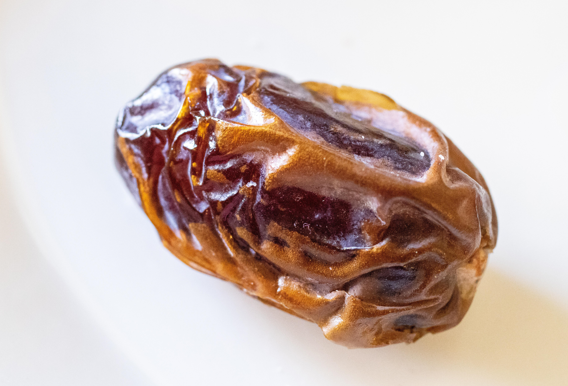
Today, 76% of all dates grown in Israel, some 38,000 tons of fruit are Medjool dates.
Now, if Medjool is such a wonderful and beloved date, what is the issue?
Well, there are several problems with varietal imperialism. Genetic diversity is an insurance policy. When an entire crop depends heavily on one variety, it becomes far more vulnerable to pests and disease. Evolution never stops, and from time to time a particular insect, fungus, or bacterium develops the ability to overcome a variety’s defenses.
A famous example comes from bananas. For most of the 20th century, the global banana market relied almost entirely on a variety called Gros Michel. In fact, until around 1950, everyone in the Western world who ate a banana was eating Gros Michel. Then a mysterious fungus appeared and essentially wiped it out. Within two decades, the variety vanished, and today we all eat Cavendish bananas which, in recent years, are themselves under attack from another devastating fungal disease.
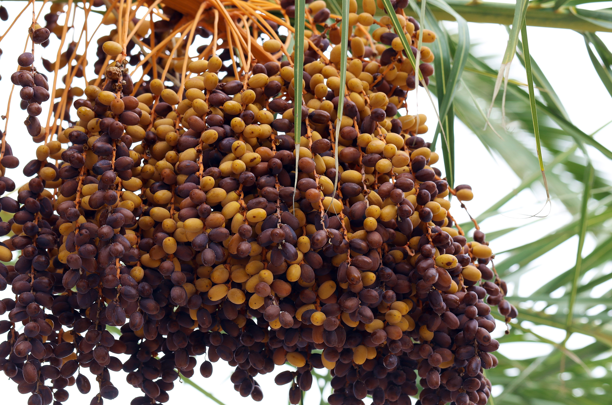
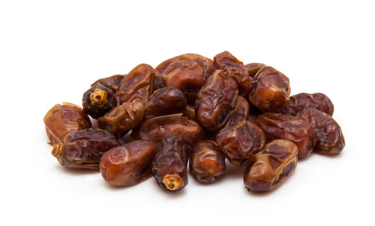
When agriculture relies on a wide range of varieties, that danger is far smaller. But the issue is not only extinction risk. Different varieties have different flavors, textures, and personalities. I love Medjool dates but I also deeply appreciate other varieties, like the bright yellow Barhi, which belongs to an entirely different culinary context, or the wonderful Halawi, which happens to be with us in the garden right now.
Like Medjool, Halawi arrived here from Iraq in the mid-20th century but it is a very different date. It is smaller, eaten semi-dried, and to me its flavor feels like a meeting point between toffee and caramel: sweet, but never too sweet. A perfect summer date. And it is by no means obvious that it is still around.
Because if Medjool occupies 76% of Israel’s date orchards, Halawi accounts for less than 3% under a thousand tons of fruit per year. And when it comes to organic cultivation, it is far less than that.