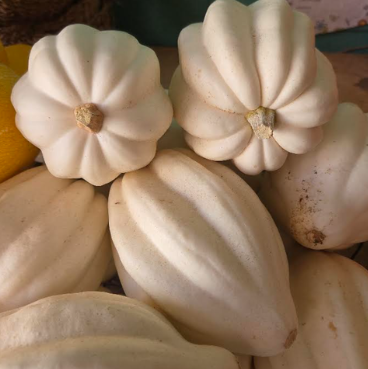
Summer brings with it the summer squashes, including the one we know here as chestnut squash. This is not the first time this squash has visited our column, but this week we have a different variety on our hands: white chestnut squash. That is definitely reason to celebrate and also a good excuse to talk a little about squashes in general, and chestnut squash in particular.
As is well known, all squashes originated in the Americas. Before the end of the 16th century, no one in Europe, the Middle East, or the interior of Asia had ever encountered a squash. But the moment it appeared, the Old World embraced it warmly, both as part of the menu and as part of its cultural imagination.
The pumpkin’s connection to Thanksgiving and Halloween was born in North America, but traveled in different forms across Europe. Its rise to full icon status was completed in the 20th century through Walt Disney’s Cinderella, which remains one of the peaks of animated cinema.
Cinderella’s pumpkin is the common pumpkin, the kind that truly can grow to giant proportions. But it is worth remembering that it is only one of many squash varieties that crossed the Atlantic from North America. One of those was a small, sweet squash known there as acorn squash.
It does indeed resemble an acorn to some extent, though it is much larger—closer to the size of a melon. Acorn squash usually has sweet orange flesh. So when we talk about chestnut squash, do we actually mean acorn squash? The mildly irritating answer is: yes and no.
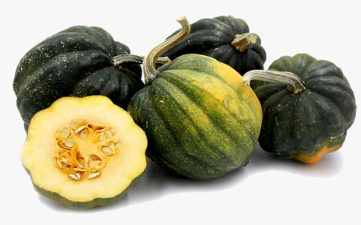
“Yes,” because botanically speaking, chestnut squash is absolutely a direct genetic descendant of acorn squash or, if you prefer, a variety of it. But there is also a “no.” Why? Because in the 400 years since acorn squash crossed the ocean and acclimated to the Old World, Europe, the Middle East, and the Far East it continued to evolve. Or more precisely: it continued to be shaped through agricultural breeding.
Different local varieties were developed in various places. One of those local descendants of acorn squash was born right here in Israel, at the Volcanic Institute, and was given the name and branding – chestnut squash.
Does it really taste like chestnuts? The truth is: yes, it does. Not one-to-one, and sometimes the method of preparation matters, because texture plays a role. I personally find the chestnut note more noticeable when the squash is roasted. But no, this is not some absurd marketing trick, if you close your eyes and chew, you can absolutely isolate that chestnut-like quality.
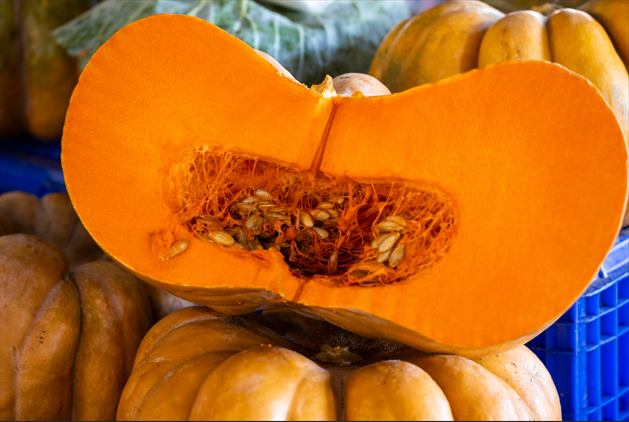
So yes, this specific squash is an Israeli development of a vegetable that was born across the ocean. And this week, what we actually have is a unique sub-variety of the acorn-squash descendant known here as chestnut squash: white chestnut squash.
What is white chestnut squash? Simply put, it is a chestnut squash whose skin is very pale, tending toward white, and in that respect its appearance is especially striking and elegant. Its flesh, however, is orange though sometimes in a slightly lighter shade.
And the taste? After all, that is why we are here. Is there a difference between the flavor of regular chestnut squash and white chestnut squash? I think there is. It is not dramatic, but it is there. In both, the chestnut note is very present, but the white one, at least from what I have tasted is a little less sweet, and that is not necessarily a bad thing.
Quite the opposite. When I prepare stews or roasted squash and roasting is one of the best ways to experience chestnut squash, I do not always want excessive sweetness. For that same reason, when it comes to grilled vegetables, I will sometimes prefer a potato over a sweet potato. And in those cases, I will also prefer white chestnut squash over the regular kind.