We tend to think of fruits and vegetables as creations of nature, something God created or evolution shaped over millions of years. The truth is often quite different.
Yes, it is well known that the vast majority of the agricultural produce we eat is the result of domestication and selective breeding, but that is not exactly what I mean. I am talking about fruits and vegetables that we assume developed naturally through domestication, but were actually created as entirely new varieties that had never existed in nature before.
Grapefruit is a perfect example, and what makes its story especially interesting is that we know exactly how it came into the world.
In 1692, an English merchant named Captain Shaddock arrived on the Caribbean island of Jamaica. Citrus fruits originally came from Asia and gradually spread around the world. By the time Shaddock reached Jamaica, citrus trees were already well established there, particularly a variety of sweet orange.
Before settling in Jamaica, Shaddock had spent time in Indonesia, where he picked up several pomelos. He saved the seeds, and when he reached Jamaica, he planted them and grew several pomelo trees. In fact, shaddock remains one of the English names for pomelo to this day, named after our citrus-loving captain.
Later, he crossed his pomelos with the local orange. The result was a strange new fruit, large like a pomelo on the outside, but with flesh resembling an orange and a distinctive sweet and sour flavor somewhere between the two.
The unusual fruit Captain Shaddock created was probably the ancestor of every grapefruit we know today. By 1750, written references to it had already begun to appear. For several decades it was known as the “forbidden fruit.” Its unusual flavor and relatively large size made it increasingly popular, and by the beginning of the 19th century, grapefruit orchards were already common in the United States, particularly in Florida. The fruit also gained admirers in Europe, and by then it had acquired the name we still use today: grapefruit.
Grapefruit is rich in vitamins and antioxidants, but there is one important thing to remember. It also contains compounds that interfere with the way the body breaks down certain substances, and this can cause problematic, sometimes even dangerous, interactions with a number of common medications. So if you take any medication regularly, or even temporarily, make sure there is no grapefruit interaction before eating the fruit or drinking its juice.
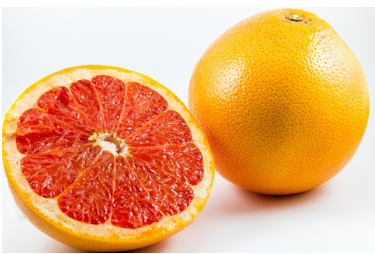
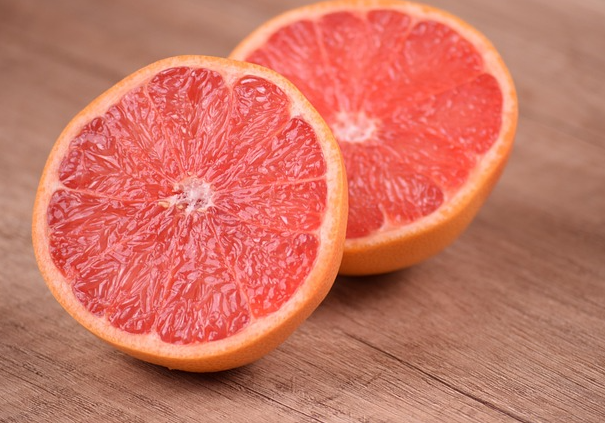
In any case, grapefruit has a distinctive, delicate flavor that has made it an extremely popular fruit in Western cuisine. But the grapefruit we are featuring today is a little more special. It is what we commonly call red grapefruit.
In practice, that name refers to several grapefruit varieties whose flesh is red rather than yellow or pink. I will get to the advantages of that in a moment, but first, how did it happen? Did someone deliberately create a red grapefruit?
Not exactly.
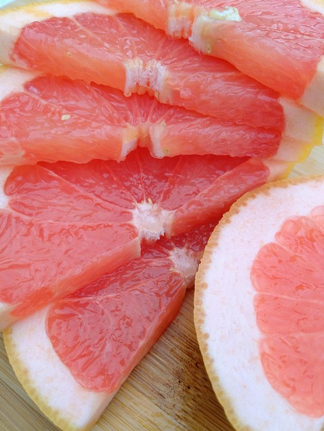
In 1929, a farmer in Texas discovered that one of the trees in his grapefruit orchard was producing fruit with red flesh. Where did the color come from? A mutation had occurred in that particular tree, causing it to produce large amounts of a pigment called lycopene.
The lycopene did more than give the fruit its striking color. It also softened the flavor and made the red grapefruit sweeter. The Texas farmer recognized the opportunity, took cuttings from the unusual tree, and began reproducing it.
Today, there are many varieties of red grapefruit, all descended from that successful mutation. We also now know that lycopene is an important antioxidant, giving red grapefruit an additional nutritional advantage.
In other words, it really is an antioxidant powerhouse.