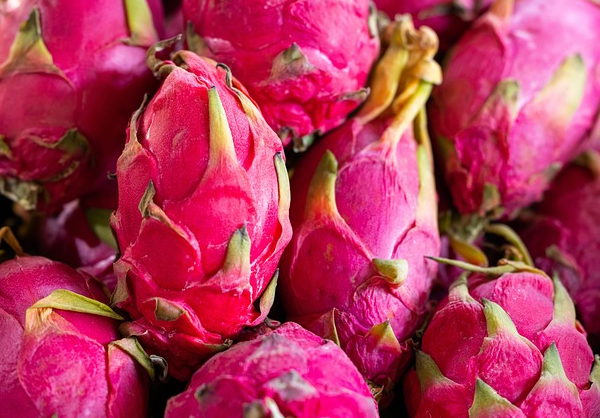
If I had to imagine a fruit invented by aliens, I would probably imagine pitaya. Look at this thing, in the attached picture, and understand how creative nature can be.
So where did this red-purple thing with spikes suddenly appear from? To understand where it came from, it is worth understanding what we are talking about. Well, pitaya is actually the fruit of a plant from the cactus family.
This should already be a pretty thick hint, because the origin of all cacti is from Central and South America. Cacti are not among our common edible plants; there is of course one exception, and that is the prickly pear and sabres fruits.
So the prickly pear is indeed not 'native', but it is a fairly veteran immigrant that arrived in the Land of Israel already in the 19th century. The pitaya, which in its taste and texture somewhat resembles sabres (even if it is deeper, sweeter, and much more interesting), grows wild throughout South America. There are several wild varieties, and the indigenous population has probably been consuming and growing this plant for thousands of years – the origin of the name pitaya is in one of the indigenous languages of South America.
At the beginning of the twentieth century, the French brought the plant for cultivation in French Indochina in Southeast Asia, which would later be called Vietnam. From Vietnam, the plant spread throughout the Far East, and pitaya became known as 'dragon fruit'. Truth be told, when you look at it, it is easy to understand why – the name dragon fruit definitely suits it.
Pitaya arrived in Israel thanks to the efforts of Professor Yosef Mizrahi, who himself wandered the world and collected plants of several pitaya varieties. Professor Mizrahi's assumption was that because this plant, like most cactus varieties, needs little water, it would be possible to acclimatize it and turn it into a standard crop and grow it in the arid regions of the Negev and Arava.
Mizrahi indeed succeeded in acclimatizing several varieties for cultivation in Israel, but then encountered a new problem. In the South American nature, pitaya flowers are pollinated by a large species of fruit bats. In Israel, they have no natural pollinator, and therefore to get fruit, manual pollination is required, and given that pitaya is a plant that can reach a height of six meters, the matter became complicated and uneconomical.
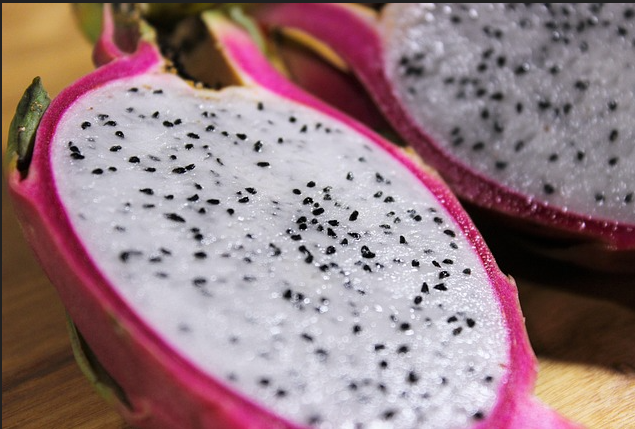
So years of research and development were required until local varieties were created that do not require an external pollinator. Truth be told, it was worth the wait. Because this dragon not only looks amazing on the outside but also on the inside. Sometimes the flesh is purple and sometimes white; it is always delicious, but I am crazy about the white variety, dotted with black seeds – it looks like a fruit designed by a top designer, and its taste is refreshing and special.
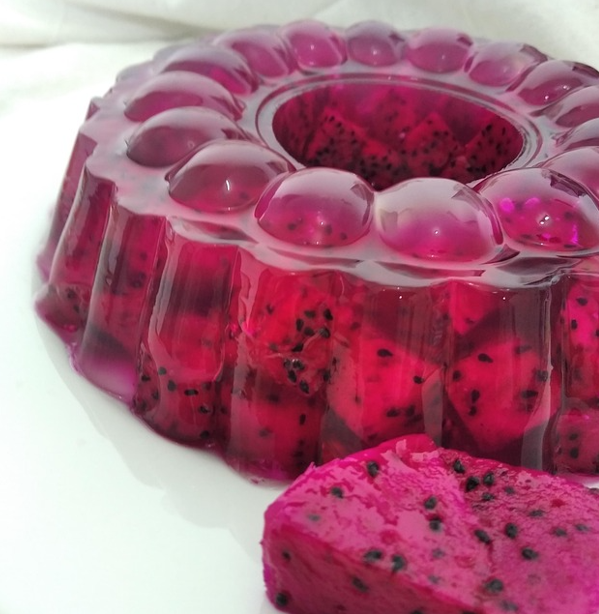
This fruit is also extremely healthy; it is low in calories, which makes it attractive for those who want to watch their weight. In the same breath, I will note that 'dragon fruit' is rich in antioxidants and dietary fiber.
I like to chill it, incorporate it into cold platters, fruit salads, and since wretched August is already here, I decided to try turning the dragons into sorbet.