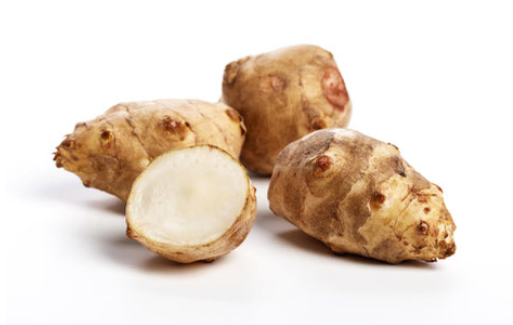
There is something mysterious about the Jerusalem artichoke. It starts with the name itself (which, by the way, is not even the official one but we will get to that). The name suggests a local vegetable, perhaps even something rooted in Jerusalem.
Well, not quite. The Jerusalem artichoke is not from Jerusalem, and it is not even an artichoke. There is a certain similarity in flavor (hence the “artichoke” part), but that is where the resemblance ends.
In reality, the Jerusalem artichoke is a perennial plant from the daisy family, and it actually originates in North America. Humans have cultivated it for centuries but those humans were the Indigenous peoples of the Mississippi Valley (later labeled “Indians” by Europeans). It only made its way to the Old World in the 17th century.
In other words, it is safe to assume that before the 18th century, no one in Jerusalem had ever encountered this tuber.
Unlike the potato, another American native that went on to dominate both cuisine and economies, the Jerusalem artichoke never quite reached that level of global influence. Instead, it found its place mainly in Mediterranean cuisines such as Italian, Turkish, and North African cooking (where it is known among North African communities as kasbia).
So where does the name “Jerusalem artichoke” come from?
It is actually a translation from Italian. And why did the Italians call it that? The “artichoke” part is easy, it echoes the flavor of the artichoke, a staple of Italian cuisine since Roman times.
Although the true artichoke comes from southern Europe and the edible part is its flower (not a tuber growing underground), botanically the two are distant relatives, they both belong to the daisy family, known for its many-petaled flowers. In fact, the Jerusalem artichoke plant produces flowers that resemble small sunflowers.
So how did Jerusalem enter the story?
There is a popular myth that the tuber’s irregular shape reminded someone of the ruins of Jerusalem, and that is how the name stuck. It is a charming story but not true.
Remember those sunflower-like flowers? Italian explorers in North America noticed the resemblance and began calling the plant girasole, the Italian word for sunflower. From there, the name traveled into English, where it was preserved phonetically it transformed into Jerusalem, simply because it sounded similar and made more sense to English ears.
The twist? The distorted name eventually made its way back into Italian and from there, into common usage across languages.
This is not the official Hebrew name either. The proper term is tuberous sunflower, again reflecting its botanical connection to the sunflower and the daisy family.
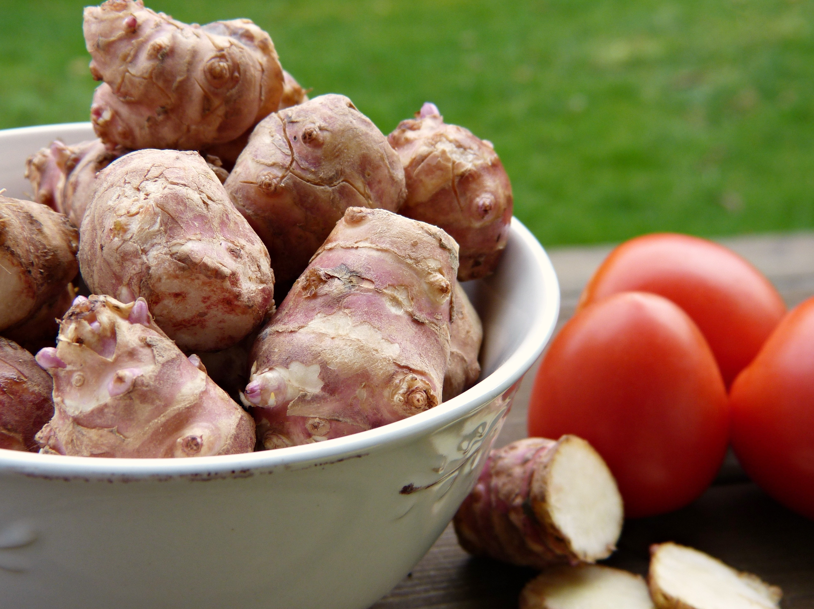
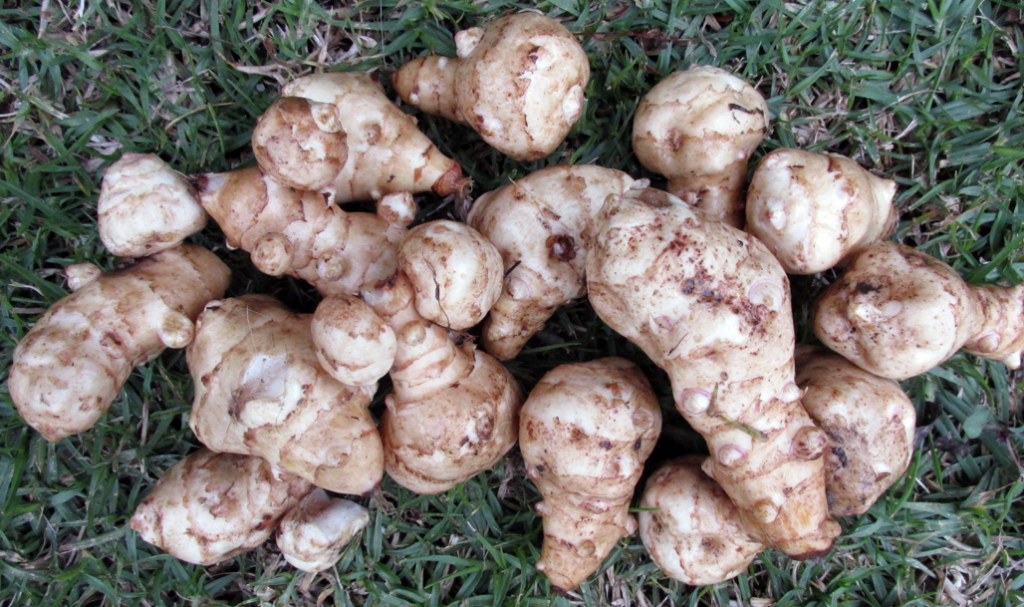
Now that we have spent most of this column on the history of its name, let us talk about the tuber itself and why I love it so much.
Like other tubers, Jerusalem artichoke is rich in complex carbohydrates. But unlike potatoes or sweet potatoes, where the main carbohydrate is starch, here the primary compound is inulin.
Why does that matter? Because it behaves differently and tastes different. (Fun fact: inulin is also found in artichokes, which likely explains the similarity in flavor.)
Unlike starch, inulin is easier to digest and is known to stimulate the digestive system. But for me, the real magic is the taste: it is unlike any other type of tuber layered, nuanced, and far more complex than potato or sweet potato.
So what do I do with it?
In honor of winter’s lingering farewell this year, I will go for a creamy Jerusalem artichoke soup. But this tuber is just as wonderful roasted in the oven, used as a filling for dumplings, or even mashed as a rich, nutty alternative to classic mashed potatoes.