Yes, it is August. Unless you’re one of the lucky people who made it to the airport in time and are already on your way to missing our little country until the holidays are over, I don’t have much comfort to offer you, other than the old saying that misery loves company.
Yes, I am here too, dealing with the heat, the humidity, and the constant layer of sweat. On the other hand, just as nothing is entirely bad, even dreadful August has one wonderful way of redeeming itself. I am talking about the far too short season of the Maya mango.
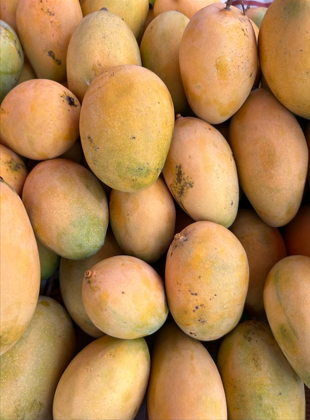
So let us forget about August for a moment and focus on this remarkable fruit. Mangoes have already made an appearance in this column before, but the Maya variety is always worth revisiting, even in the middle of the heat and humidity.
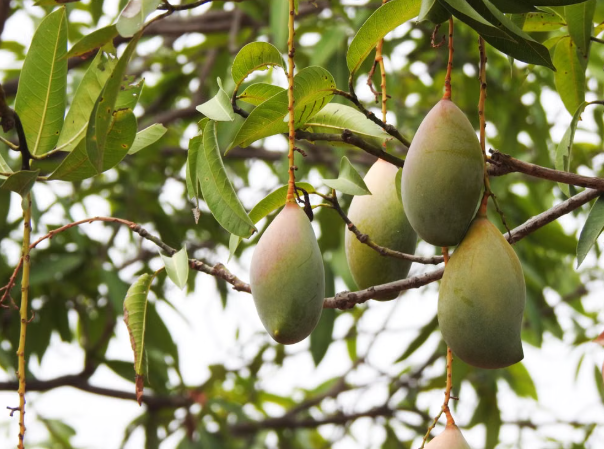
As you probably know, mangoes originated in the tropical regions of Asia. Around thirty-five wild mango species are known, and over the centuries they gave rise to hundreds of cultivated varieties.
Contrary to the common perception in Israel, most of the original mango varieties are actually more sour than sweet. Around the world they serve as the basis for spicy and tangy foods such as amba and chutneys, as well as various industrial uses. The sweet dessert mangoes we know today are a relatively small and distinct group.
Although mango feels like a relatively recent addition to Israeli agriculture, the Maya mango is, by local standards, practically a veteran. Despite its modern-sounding name, it was one of the very first mango varieties developed in Israel. Considering just how successful it turned out to be, that is quite remarkable.
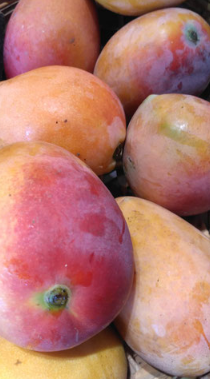
The Maya variety first appeared in 1931. Yes, it is about to celebrate its hundredth birthday. And despite the many varieties that have followed, no one has truly managed to replace it.
Its only real drawback is its incredibly short season. It begins around the middle of July and is already over by the middle of August.
So how did this wonderful variety come to be?
The Third and Fourth Aliyah brought many talented botanists to the Land of Israel, people who understood there was little future for them in Europe. One of them was Hanan (Hans) Oppenheimer, who decided that mangoes would grow here. And they did.
In 1931, his experimental orchard finally bore fruit. The mangoes were exceptionally sweet, completely free of fibers, and the new variety was named after his daughter, Maya.
It truly is a wonderful mango. The fruit is round, beautifully orange, generously sized, averaging around 400 grams, and for many years the Maya has been a favorite on international export markets.
A perfect fruit.
Its season, however, is heartbreakingly short.
And right now, it is here. Just like August.
So if you will excuse me, I will keep this week’s column a little shorter than usual. I have a few perfectly chilled Maya mangoes waiting in the refrigerator, and at this very moment I intend to peel them, cut them into small cubes, and simply enjoy every bite.