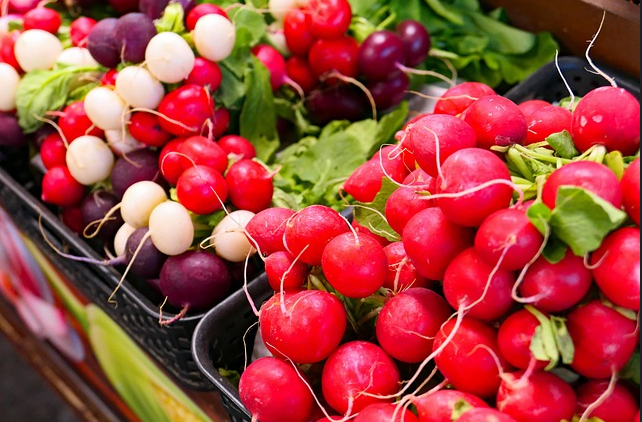
“Why does a little red radish send a slender tail down into the earth?”
Why did I open this post with a line from the classic Hebrew children’s song “Why?” better known as “Hudi Hamudi,” written by Moshe Daphna and composed by Moshe Wilensky? Because I think it is a wonderful way to illustrate just how deeply rooted the radish is in Israeli cuisine.
Daphna wrote the song in 1941, and Hudi, the child it describes, was his real grandson. In 1973, the grown up “Hudi,” Captain Ehud Daphna, was killed while commanding a tank company during the defensive battles on the Golan Heights. Since then, this innocent children’s song has carried a tragic meaning as well.
When Daphna wrote it, however, it was not a tragic song. It was a faithful portrait of a child’s life on a kibbutz. The song became popular because that simple way of life represented a kind of Zionist ideal. And yes, I am not surprised to find a radish there, because, it is the most Israeli root around.
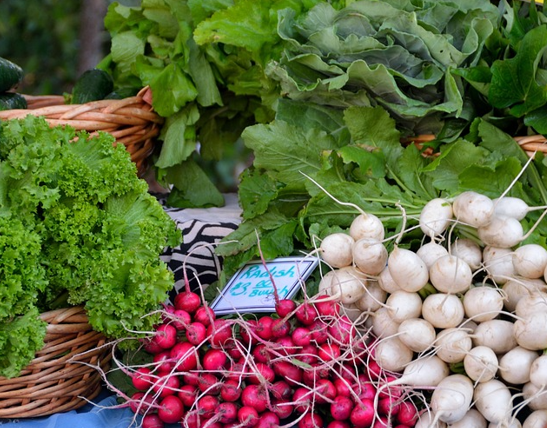
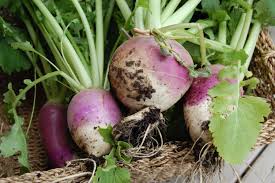
In Hebrew, the small radish we call “tznonit” is a variety, or perhaps a separate species, depending on whom you ask, of the larger vegetable known as “tznon.” What is the difference between the two? Put simply, size, although there are a few other differences that I will get to shortly. If it is large and purple, it is a tznon. If it is small and usually comes in a bunch, you are looking at tznoniyot, the little radishes.
The larger radish has been here since ancient times, or at least since the beginning of the Common Era. Its wild ancestors originated in Southeast Asia, but by the early days of the Roman Empire, the radish had already found its way to the Mediterranean basin. It has been a familiar crop here ever since.
The little radish is a direct descendant, but this smaller, milder variety was developed at some unknown time and place in Southern or Central Europe.
It is unclear when it first arrived here. I have even heard a theory, which I have no way either to prove or disprove, that it arrived from Europe with the Crusaders during the twelfth century. What is clear is that by the time Zionism emerged in the late nineteenth century, the radish was already a local crop.
Zionism made agricultural settlement and working the land central goals, first in the early farming colonies and later in the unique form of settlement that Zionism introduced to the world: the kibbutz.
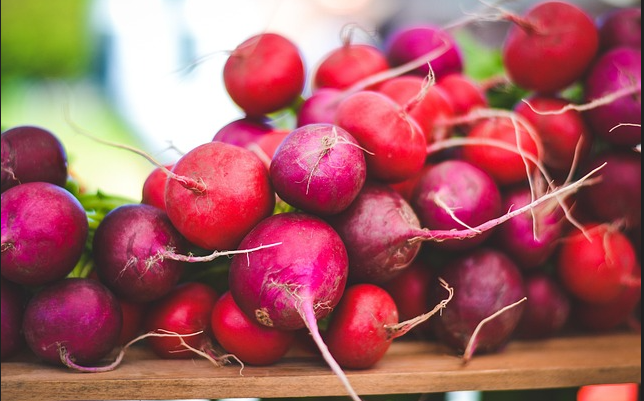
The radish became a permanent resident of the kibbutz vegetable garden, and from there it found its way into Israeli salad.
And yes, I know that there is a rare breed of people who do not believe that radishes belong in an Israeli salad. I simply choose to ignore them.
Which brings us back to Hudi Hamudi. Partly because of its tragic history, the song became a symbol of the beautiful side of Israeli life, and the radish is part of the landscape that shaped it.
I also love radishes, especially in salad, and I eat salad at least twice a day. They are at their very best when they arrive fresh and crisp after the first rain.