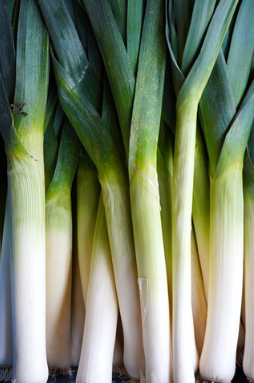
The leek belongs to the onion family and was already cultivated in ancient Egypt. Since its wild varieties grow across a vast region, from North Africa and the Middle East all the way to China, it was probably domesticated separately in the East as well. What we do know is that by around the beginning of the Common Era, leeks were being grown throughout much of the Old World, including the regions we now think of as classical Europe.
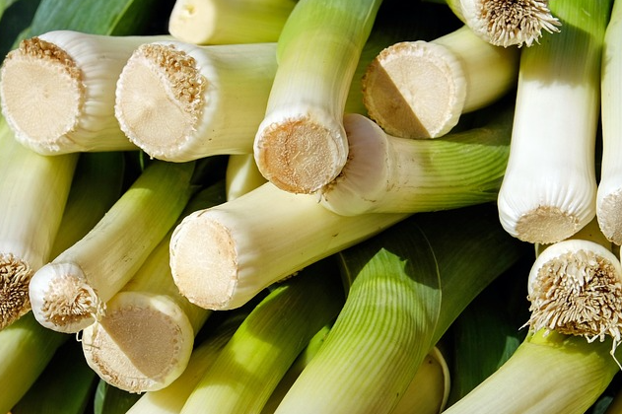
It is important to remember that in ancient times, vegetables from the onion family were especially valuable. In a world without refrigeration, any vegetable that could stay fresh for a long time was a real asset. But the leek had something else going for it. Unlike most onions, its flavor is gentler and richer, while its texture is more substantial, almost “meaty,” which means it can easily become the star of a dish.
That is why leeks appear in some of the signature dishes of several quite different cuisines.
Since leeks have already visited this column before, I will allow myself a small detour and focus on Welsh cuisine. Yes, there is such a thing.
Wales is a region in the southern part of the island of Great Britain that has preserved cultural traditions dating back to before the Saxon conquest of Britain in the 6th century CE. Unlike many of the Celtic cultures that flourished across the British Isles before the Romans, and later the Germanic Saxon tribes, transformed the region culturally and demographically, the Welsh managed to preserve their unique language along with many other cultural traditions.
Almost 800 years have passed since King Edward I of England conquered the neighboring principality and incorporated it into his kingdom. The symbolic act was appointing his eldest son “Prince of Wales,” a tradition that has remained the official title of the British heir to the throne ever since. And yet, Wales managed to preserve many of its distinctive traditions. One of them is the leek, which for the Welsh is not merely a vegetable, but a national symbol.
How did a remote corner of the British Isles come to adopt the leek as a national emblem, not to mention a major local crop and a star of traditional Welsh cooking?
The answer is not entirely clear.
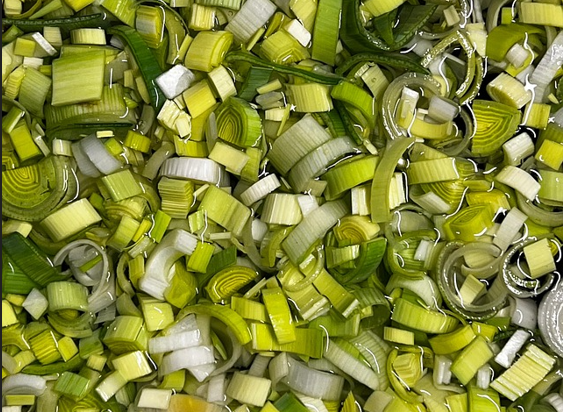
Leeks probably arrived in Britain with the Roman conquest in the first century CE, and they clearly adapted particularly well to Wales. From around the 6th century onward, stories and legends begin to appear linking leeks with Welsh soldiers, who supposedly wore leeks into battle. One famous legend even places a mythical battle in the middle of a leek field.
What is clear is that since the Middle Ages, this vegetable has been strangely and deeply associated with the Welsh.
That cultural connection naturally found its way into Welsh cuisine, where leeks appear in many traditional soups and stews. The Welsh are also convinced that the leeks they grow are the finest and tastiest in the world. Recently, the British government even granted Welsh Leeks protected regional status.
Now that we have taken this little detour through Wales, it is worth remembering that leeks are stars in many other cuisines as well. They feature prominently in Turkish, Italian, and French cooking. The French even prepare young leeks much like asparagus.
Jewish cuisine has its own leek tradition too. Prasa patties are considered a Sephardic Jewish creation, and the dish remains popular both among Sephardic communities in Israel and in the many places where Jews expelled from Spain eventually settled, including the Balkans, North Africa, and even the British Isles.
So give the leek the respect it deserves.
If it were just another onion, none of this would have happened.