In many ways, the story of human evolution at least up until the dawn of recorded history can be described as a pursuit of protein. Humans need protein; it’s the raw material from which our muscles are built, and the search for it shaped much of our behavior.
We all know that early humans were “hunter-gatherers.” The picture that usually comes to mind is a group of shaggy-haired cave dwellers taking down a mammoth. In reality, for most people throughout most of history, eating meat was a relatively rare event.
Most of the time, people relied on plant-based foods. Which brings us back to protein. The problem is that most plants are low in protein. The exceptions are grains and legumes, which is why nearly every advanced human society was built around cultivating these crops, they provided a reliable protein base. Our own region, often considered the cradle of human civilization, owes much of its development to wheat and the ability to turn it into bread.
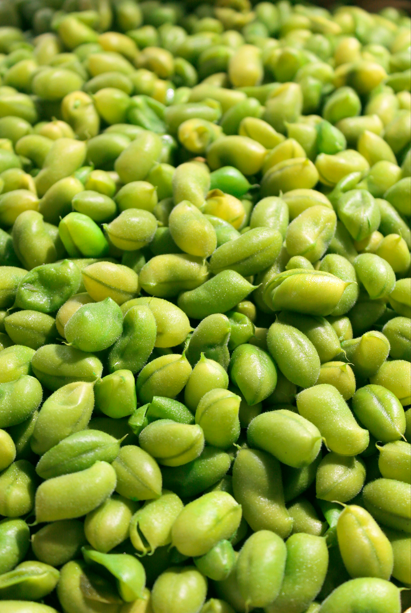
Wheat contains a relatively high amount of protein, which you know as gluten. Yes, the much-maligned gluten (sometimes unfairly, sometimes not) is one of the key reasons wheat became domesticated, it provided a readily available protein source that humans desperately needed. Add chickpeas to the mix, another legume consumed here for thousands of years, and you begin to understand why the first cities and civilizations arose in the Levant, the Fertile Crescent, and Israel.
This principle securing protein from plants applies elsewhere too. In South America, quinoa played that role. Today, though, our attention shifts to the Far East and to the soybean.
It’s hard to overstate the importance of soy in China, Korea, and Japan. The first written reference to soy appears in an 8th-century BCE Chinese text, but it was likely used long before that after all, soy contains more than 11% protein, which is a lot when we’re talking about plants.
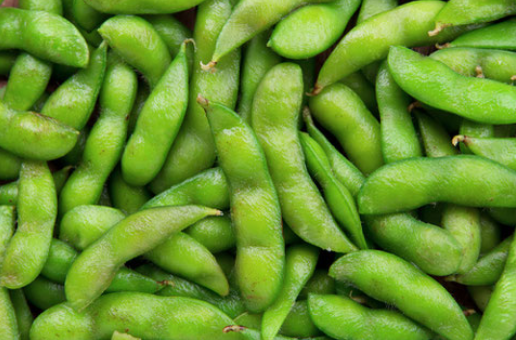
Most of us are familiar with processed soy products like tofu or miso, but soy can also be eaten in its unprocessed, even fresh, form. Yes, I’m talking about edamame.
The word edamame comes from Japanese, literally meaning “beans on a stem.” It first appeared in a medieval Japanese text, and by the 16th century, it was being used in the sense we know today: fresh soybeans in their pods.
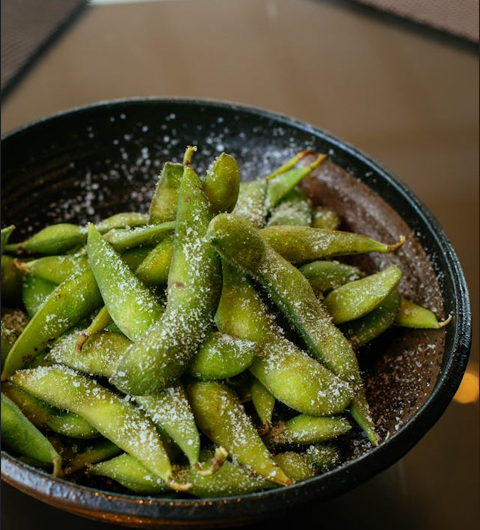
I write “fresh,” but the secret of edamame lies in picking the beans before they fully ripen. That’s why edamame is green, while mature soybeans turn a reddish-brown. The light green color we’re used to is the mark of beans harvested young at their best when still tender and slightly sweet.
At this stage, they’re crisp, refreshing, and delightful. Unfortunately, in Israel, most consumers are used to eating edamame only in its frozen form. But when it’s freshly picked from the field, you can eat it as is, or give it a quick boil, steam, or stir-fry.
For anyone looking to cut down on animal protein, or avoid gluten while still diversifying their protein intake, edamame is a wonderful, healthy choice. It’s not just protein, it also contains carbs, dietary fiber, vitamins, and powerful antioxidants. And when it comes fresh from a local organic farmer, all the better.