“He did not know her name,
but that braid
it followed him along the way,
and he knew: one day they would meet again,
at dawn of dew or in the evening sun.”
From a poem by Haim Hefer
Why open with these timeless lines? Because this week’s star brings that same image to mind – a braid.
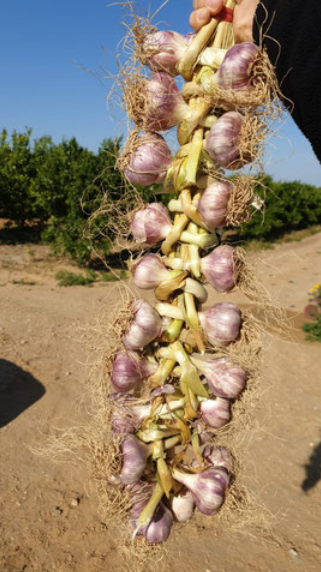
Not just any braid, but one grown in the western Negev, in the Gaza envelope, not far from the road to Be’er Sheva. A braid that grew against the backdrop of distant thunder and quiet dawns and now, it is here.
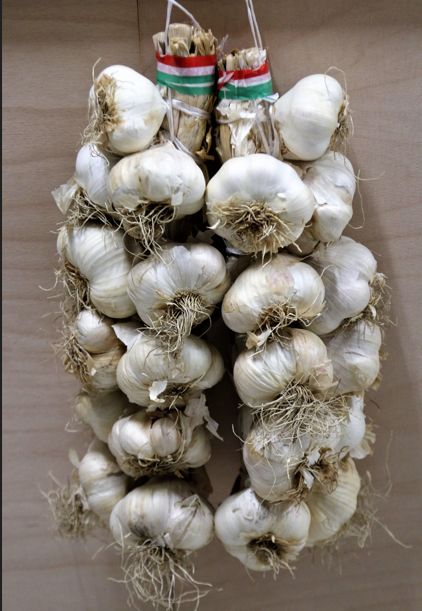
Of course, there is no real suspense you have read the title. We are talking about a fresh garlic braid. I am holding one right now, and believe me, it carries a strangely romantic vibe. If that makes you cringe, you might want to check whether you are secretly a vampire. After all, we are talking about garlic.
A quick reminder: garlic (which we have discussed here many times) is a plant from the Amaryllis family. Its bulbs and even its leave have been used as both food and medicine around the Mediterranean for at least 5,000 years. Its key active compound, allicin, gives garlic its sharp flavor and is known for its natural antibacterial properties.
Studies suggest that garlic consumption can help lower cholesterol levels and may contribute to regulating blood pressure. In short, it is a remarkably healthy bulb.
So why a braid? And just to be clear, when I say “braid,” I mean a long bundle of dozens of fresh, organically grown purple garlic heads.
Well, when I get my hands on a garlic braid, I know I am set for at least half a year. Why does that matter? After all, garlic is always available.
That is true but it’s not the same garlic. The vast majority of dry garlic you’ll find on supermarket shelves is imported, mostly from China.
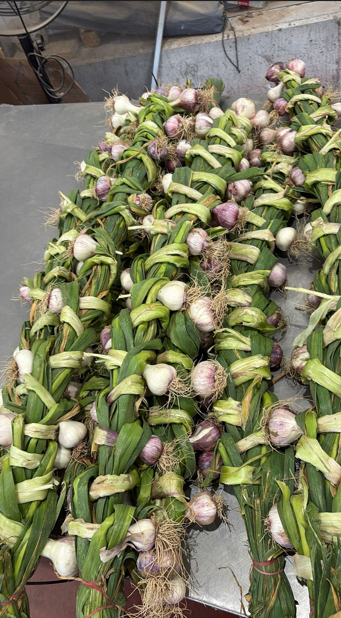
It wasn’t always like this. Garlic used to be a common Israeli crop, much of it grown in the western Negev. Over the past decade, which has changed and I’ve already written about the decline of local garlic as a side effect of globalization. These days, it’s hard to find Israeli garlic, and even harder to find fresh, organic Israeli garlic.
That’s why, when a braid is available, I don’t hesitate. I enjoy the fresh purple garlic while it’s in season, and the rest of the braid gradually dries into excellent, long-lasting garlic.
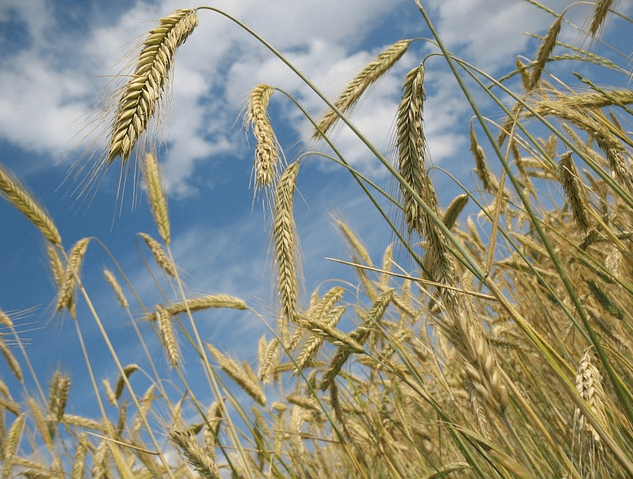
This particular braid was grown in the fields of the Gaza envelope. Just like the wheat, it carries something more than flavor.
With this braid, too hope grows. Or rather, grows again.