I’ve used this comparison before that “the Japanese are like everyone else, only more so”, so allow me to recycle it. Our featured vegetable this week fits that description perfectly: one of the most quintessentially Japanese vegetables you’ll ever meet.
By now you’re probably wondering: fine, but what exactly is daikon, and what makes it so distinctly Japanese? Well, in our global world, most popular vegetables cross oceans and cuisines you’ll find tomatoes, cucumbers, and lettuce in every supermarket and every kitchen. And yet, there are still fruits and vegetables with a strong, unmistakable local identity. Daikon is one of them.
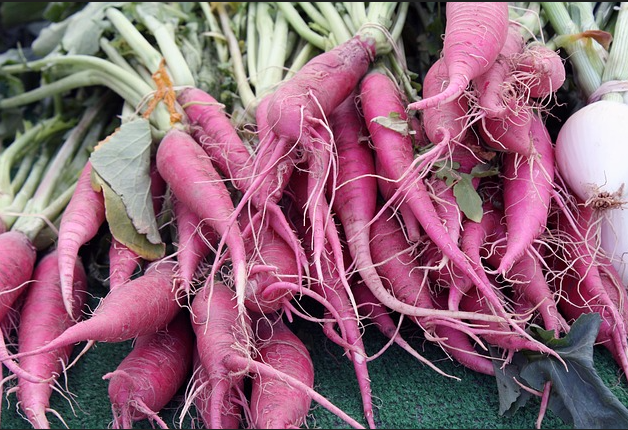
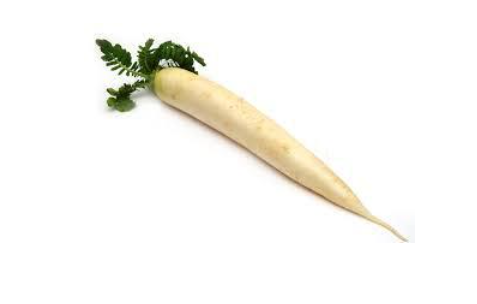
At first glance, daikon looks like an oversized white carrot (and in fact, the word “daikon” in Japanese simply means “big root”). But don’t be fooled, it isn’t a carrot at all (carrots belong to the Apiaceae family). Daikon is actually the root of a cruciferous plant, closely related to the radish (another proud member of the crucifer clan). Native to Asia, it appears across Asian cuisines: Korean, Chinese, and above all, Japanese.
Which brings us back to that opening analogy: daikon, often called “Japanese radish,” does resemble a radish in texture and flavor just more so. Bigger, bolder, sharper. Think of it as a radish with extra personality – Japanese personality.
Why haven’t you heard much about it until recently? I don’t have a good answer. Somehow, this wonderful root never quite managed to cross over into Western cooking, staying mostly within the orbit of Japanese cuisine. And that’s a shame, because it’s an incredibly tasty, versatile vegetable.
Daikon can be eaten in every form imaginable. It’s delicious raw (sliced, whole, or grated the way the Japanese like it), cooked (steamed, roasted, boiled, or stir-fried), dried, and of course pickled, which is the Japanese favorite.
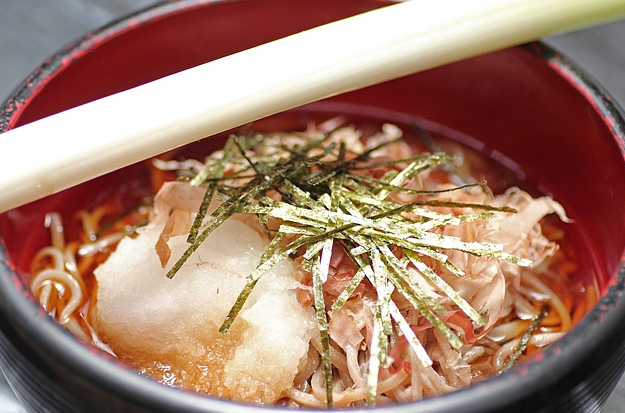
In fact, it appears in almost every category of Japanese cooking, from sushi to ramen. Ask the Japanese themselves, and many will tell you: daikon is one of the vegetables that defines their culinary DNA. And as you already know, the Japanese don’t compromise on quality, they know exactly what’s good.
Nutritionally, daikon has an impressive résumé: vitamins, minerals, fiber, antioxidants—all packed into one root. No wonder traditional Chinese medicine considers it a healing plant, said to strengthen the immune system and soothe and stabilize digestion.
In short, this week we have fresh daikon in the garden and it’s a true celebration for anyone who loves authentic Japanese cuisine.