Few fruits have echoed through Western culture quite like the apple. Its story begins in the Middle Ages when, due to either a translation error or a creative liberty taken by the Greek translator of the Bible, the apple became identified in Christian tradition as the fruit of the Tree of Knowledge.
From there, it became a recurring motif in nearly a thousand years of Christian art including Renaissance masterpieces such as Michelangelo’s The Expulsion from Paradise. The apple’s long iconographic journey eventually stretches deep into the 20th century, ending with the tragic death of the groundbreaking genius Alan Turing, who took his own life by eating a poisoned apple.
According to a popular modern myth, Apple’s iconic bitten-apple logo was designed as a tribute to Turing. Whether or not that’s true, Turing’s choice of a poisoned apple inevitably sends us back to one of the most famous fairy tales of all time: Snow White, the one with seven dwarfs and one unforgettable apple.
The origins of the Snow White story are ancient, with versions circulating for centuries across the German-speaking world. In 1812, the Brothers Grimm published their famous version. But let us be honest, most of us recognize the story thanks to Walt Disney’s magnificent 1937 adaptation.
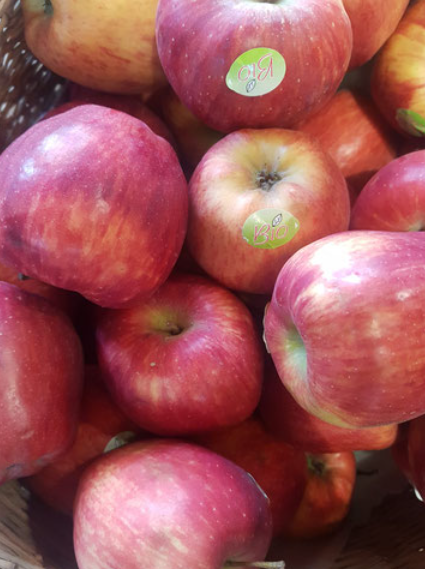
In Disney’s version, the apple is a glowing, juicy red fruit that practically screams: I am irresistible temptation. Innocent Snow White, of course, cannot resist and pays dearly, because this particular apple is laced with poison.
Do not worry, in the Disney version everything eventually works out. The dwarfs do their thing, the prince arrives with a kiss, and somewhere in a parallel universe Snow White and the prince live happily ever after.
But we are here for the bright red apple of Snow White, minus the poison because it truly is a fruit that is hard to resist.
What is interesting is that a bright red apple like the one that inspired Disney is less obvious than you might think.
The apple was indeed one of the earliest fruit trees domesticated by humans. This happened at least 7,000 years ago in Central Asia, where wild apple varieties still grow. By the Middle Ages, apples had spread to Europe and the Middle East, and later became an extremely common crop in the British colonies of the New World territories that would eventually become the United States.
Yes, we often talk about plants from the Americas transforming European cuisine but the apple is a perfect example of the opposite: an Old World crop that transformed the New World. Another famous example is Egyptian cotton grown in the American colonies, which had dramatic and tragic implications tied to the expansion of the transatlantic slave trade. But we will leave that story aside and return to apples.
The American colonies embraced the apple enthusiastically. It became a cornerstone of American food culture think endless cider and the classic apple pie.
In short, Americans fell in love with apples and took them seriously. Many of the apple varieties we know today including the shiny red apple that inspired Disney’s Snow White were developed there.
Historically, a deep red color was not quite common in apples certainly not a uniformly bright red fruit with sweet, pale flesh gleaming against the skin (just like Snow White herself: skin as white as snow, lips as red as blood).
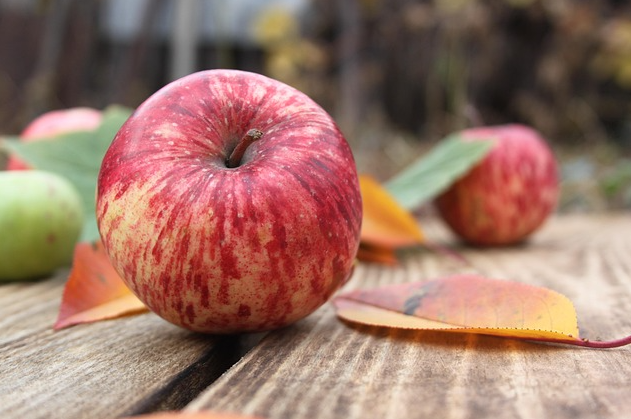
That particular apple entered the world in 1872 on a small farm in Iowa. Its name: Red Delicious.
This apple became the ancestor of several other varieties, including one called Starking, a wonderfully versatile apple great for eating fresh, juicing, or cooking. It is sweet, juicy, not mealy, and proudly wears that brilliant red color.
And why am I telling you about Starking? Because this is the variety that was successfully adapted in Israel many years ago. Its local version is known as the Hermon apple and it is waiting for you this week in the garden box.