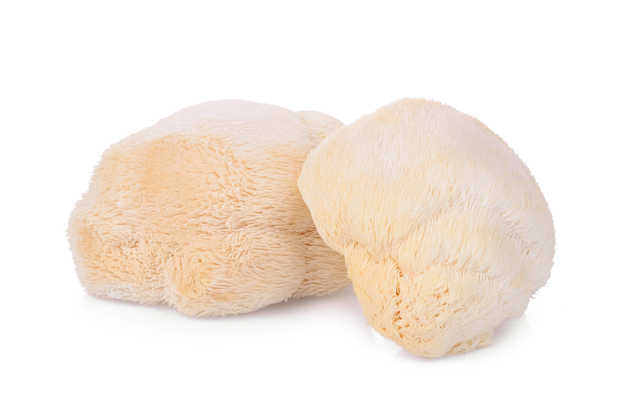
I always get excited when writing about mushrooms, because mushrooms are wonderfully strange creatures, at least for our purposes here. Of course, mushrooms aren’t actually creatures, but they’re not exactly part of the plant kingdom either.
As we know, what unites all plants is the process of photosynthesis, the ability to convert light energy, with the help of water and oxygen, into usable energy. Mushrooms work in a completely different way. They draw energy directly from their surroundings, using what is essentially an external digestive system that breaks down the organic material they grow on and extracts nutrients in their own unique fashion.
So technically, mushrooms don’t belong to the plant kingdom at all, they have a kingdom entirely of their own.
That said, edible mushrooms are a complicated story. For most of human history, people didn’t cultivate mushrooms, they foraged for them. I personally love mushroom foraging, but it’s an activity that requires knowledge, timing, patience, and of course comes with a certain amount of risk. That’s why, when I need mushrooms in the kitchen, I usually check what we happen to have here in the garden.
Unfortunately, only a small fraction of the enormous diversity of edible mushrooms can actually be cultivated. Even within that relatively short list, most people are familiar only with the classics: Agaricus bisporus, better known as champignon or portobello. In recent years, shiitake (the cornerstone mushroom of Japanese cuisine) has become more common, along with a few additional varieties. But overall, the selection remains limited and any exciting exception is cause for celebration.
And this week, we definitely have reason to celebrate. Because rather rarely, we have Lion’s Mane mushroom in the garden, a true gourmet mushroom that even today only a handful of growers know how to cultivate successfully.
Lion’s Mane is a mycelial mushroom, meaning it grows on dead organic matter. Its wild varieties are found across Eurasia as well as North America. While the species itself is widespread, actually finding it in the wild is quite rare. It’s not the kind of mushroom you casually stumble upon during an ordinary foraging trip.
These mushrooms grow deep within forests, attached to dead wood, and their fruiting conditions are extremely specific. So even when you do encounter Lion’s Mane in nature, you’ll rarely find large clusters, usually just one or two mushrooms.
On the other hand, if you do find one with a full, beautiful mane, you’ve struck culinary gold. It has a delicate nutty flavor, a soft texture, and an appearance that is genuinely spectacular.
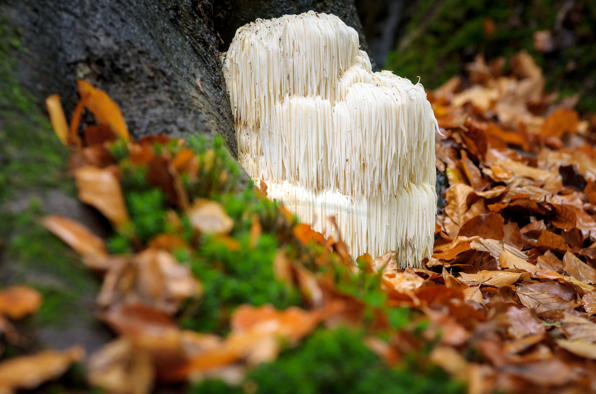
This is also the place to mention that in Traditional Chinese Medicine, Lion’s Mane holds a particularly respected status. It contains several rare active compounds, along with nutrients such as Omega-3 fatty acids, something you don’t normally associate with mushrooms. I won’t bore you with the scientific debate around its medicinal properties (there’s even ongoing discussion about possible anti-cancer potential).
In China, thanks to its role in traditional medicine and its use in numerous herbal preparations, Lion’s Mane has long been highly valued. In the West and especially here in Israel, it’s still quite difficult to cultivate commercially. This mushroom is, frankly, a bit of a diva, and very few growers manage to meet its demands.
Fortunately for me and for you, one of those rare growers happens to farm organically and supplies mushrooms directly to the garden.
So what should you do with it?
At the end of the day, I’m a simple woman who appreciates simple pleasures and Lion’s Mane is one serious pleasure.
My recommendation: sauté it gently in butter or good olive oil, add a little salt, pepper, and a squeeze of lemon.
Honestly, you don’t need anything more.