Herbs are a little like supporting actors. Anyone who loves movies knows that sometimes it is the supporting cast that makes all the difference, turning a good film into a masterpiece.
That is how I think about certain herbs. They will almost never be the star of the dish or the meal, but take them out of the equation and you are left with a much poorer culinary experience. Just like the greatest supporting actors in cinema history, the added value of herbs goes far beyond their seemingly modest official role: adding a little flavor and a little aroma.
It may sound like a small contribution, but remove them from the picture and things simply will not be the same, and definitely not in a good way.
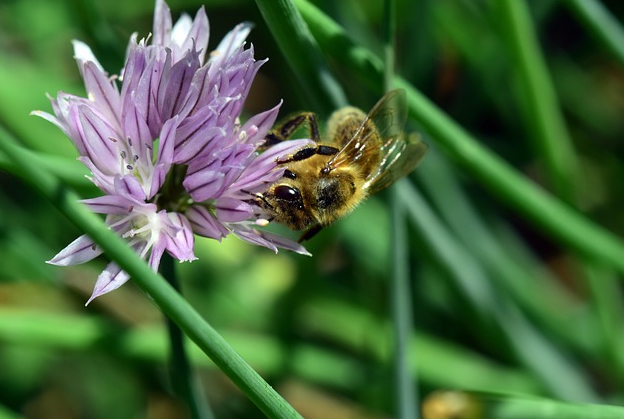
This week, we have exactly that kind of herb in the garden: garlic chives. I know many of you probably refer to this plant simply as chives. The problem is that in Hebrew there is another plant that carries that name. It is not edible, but rather a wild plant, and aside from a certain resemblance in their flowers, the two are completely different plants from different botanical families.
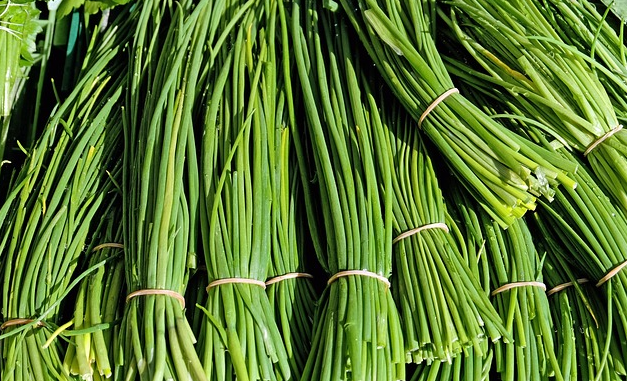
Speaking of botanical families, garlic chives already hint at their origins in the name. They belong to the Amaryllis family and are close relatives of garlic and onions. You can taste and smell the family resemblance too. I would describe the flavor and aroma of garlic chives as a delicate combination of garlic and onion.
But while garlic and onions were cultivated mainly for their bulbs, with chives the focus is entirely on the leaves. Their bulb is insignificant and has essentially withered away. True, we are familiar with green onions, which were developed for a similar purpose, and in recent years Israelis have also learned to appreciate the green leaves of fresh garlic. But chives are something different.
Their wild ancestors have an unusually broad distribution. Related varieties can be found both in the Old World, across Asia and Europe, and in the New World, particularly North America.
So when and where did garlic chives first make their way onto our plates? Opinions differ.
There are written records of chive-like plants being used in China as far back as 3,000 years ago. However, some argue that the plant mentioned in those ancient Chinese texts was similar to chives, but not exactly the garlic chives we know today. Their true origin may actually surprise you: England.
Come to think of it, this is the second week in a row that I have found myself visiting the British Isles. Last week it was because of the leek and the strange place it occupies in Welsh culture and history.
Unlike the leek, which is another variation of the onion and was brought to Britain during Roman times, garlic chives apparently traveled in the opposite direction. That makes them a relatively rare example of a popular edible plant that originated in Britain.
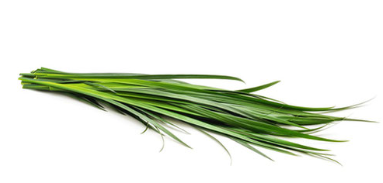
The original Celtic inhabitants of Britain were familiar with garlic chives and used them extensively. In fact, they remain fairly prominent in British cuisine to this day. I really do not want that fact to discourage you, so I should point out that they are also beloved in many other cuisines, including Mediterranean culinary heavyweights such as French and Italian cooking.
In any case, when the Romans under Emperor Claudius conquered Britain, they encountered garlic chives and later spread them throughout the Mediterranean basin. Most likely, that is how we eventually came to enjoy them here as well.
So do not forget a fresh bunch of garlic chives. Chop them finely and scatter them over a salad, add them to a stew, sprinkle them over baked fish, or even finish an omelet with them.
They really do make a difference, and definitely in a good way.