After several good years of writing this blog, it is hard to surprise me. Since I am careful about writing each week only what is in stock, the possibilities are limited. Most of the vegetables and fruits you know have already made at least one round here.
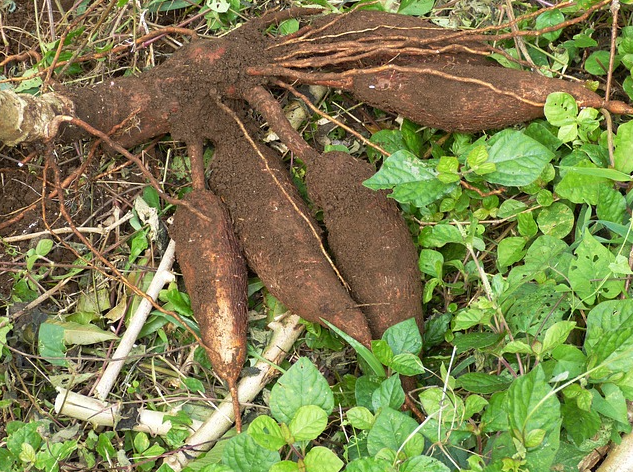
Therefore, when something truly new reaches us, I get excited. This week we have such a rare case, so meet cassava, the tuber that you most likely do not know about
At the latest, the plant was domesticated 3,000 years ago, and it was probably consumed through gathering thousands of years before that. So what exactly are we talking about? And how have we not heard of this tuber before?
It is a plant from the Euphorbiaceae family, with a thickened starch-rich root which served and still serves as a main source of carbohydrates in South America, the Caribbean region, and Africa. When the European conquerors, specifically the Portuguese, arrived in Brazil, its use was widespread, and they too soon became familiar with it.
Given this fact, just as the romance of Western man began with other tubers which he encountered in the New World such as potatoes and sweet potatoes – tubers that are now part of all our kitchens; the question arises why have most of us not heard of cassava (or yuca, if you prefer to use the other common name) and would not even recognize it when it appears on our plate?
The answer to this question is much more trivial than you think. While potatoes and sweet potatoes (and dozens of other fruits and vegetables that came to us from the Americas) originated from temperate or subtropical climate zones and therefore were easy to acclimatize throughout Europe and the Mediterranean region, cassava grows in the heart of the tropical zone.
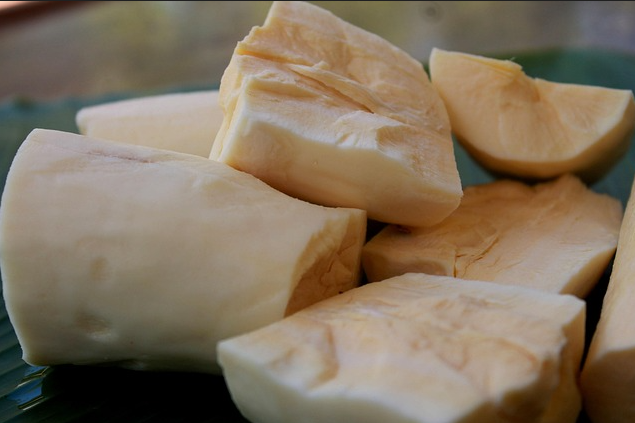
In the agricultural conditions of the 16th century, it was not possible to grow this plant in Europe or in the Middle East. On the other hand, in the Caribbean region, in Africa, and in the tropical parts of East Asia, its cultivation flourishes. Cassava arrived in Africa already during the 16th century through the Portuguese colony of Angola. Today it is one of the crops in sub-Saharan Africa.
As mentioned, in caloric terms, cassava is a starch-rich bonanza, and flour can be produced from it which is considered a particularly high-quality and tasty gluten-free flour. Remember I mentioned that most of you would not recognize cassava even if it stared at you from its plate?
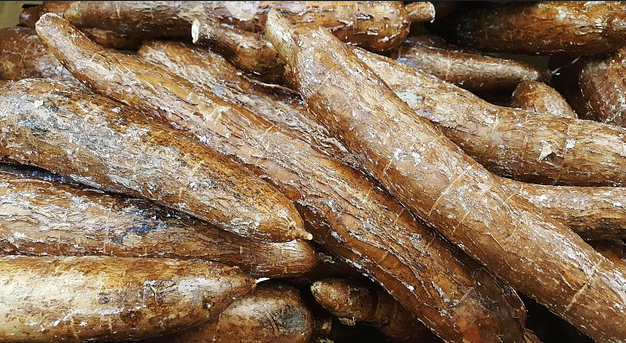
Spoiler: for most of you, this has happened. If you have ever eaten the Brazilian dessert, tapioca – you have eaten cassava. That is, tapioca is made from cassava flour.
Even today, cassava is a relatively rare crop in our region, certainly in the organic version, so its presence in the garden this week excites me.
What can we do with it?
I am going to turn it into a puree that in terms of taste and texture will be somewhere between mashed potatoes and a sweet potato puree. But you can also roast it, incorporate it into soup, and even fry it into chips.