Put it in your head (and body 🙂 ) Kale!

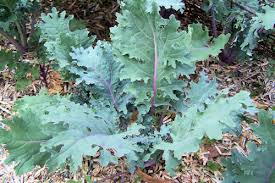
Red Russian Kale.
The garden just passed through a stormy weekend!
We have not quite recovered from the previous storm and the snow, hail and quantities of water that began to fall on us on Thursday, prevented us from plowing as we scheduled for Friday. Baby plants of lettuce, parsley, cabbage, and cauliflower are scheduled to arrive on Tuesday and will require sensitive treatment until their patch is ready for them.
The kales Latin name is Brassica Oleracea, which means something like “headless cabbage”. Many pages can be filled about kale, which is considered by researchers/nutritionist/doctors as the healthiest green leaf there ever was!
I do my best not to discriminate between my crops, as they all have superb qualities, but the kale is really a super food that is now available in abundance.
Please welcome: the Kale, super food!
green kale

dinosaur kale

The Kale is actually a primitive cabbage that throughout the years was cultivated to produce the largest leaves and therefore did not develop a closed round head, as we expect from a cabbage.
All of the cabbage family is known for its nutritional wealth and still the kale is considered a superfood among them because it is full of iron, vitamin B6, C, A, calcium, potassium and nutritional fiber. It is also rich in anti-cancerous phytochemicals and antioxidants
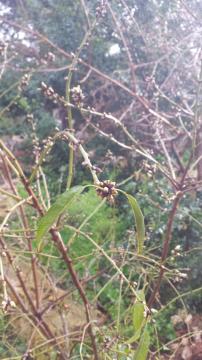
Do you recognize this?

This is actually kale. (It is best not to pick this from public gardens because it is probably sprayed and is covered by soot from motor vehicles).
Kale originates from the Mediterranean region and Asia Minor, and was grown more than 2,500 years ago by the Greeks. After them, the Romans grew it and took it with them almost everywhere. Now it's grown in the entire world and it has established a healthy status in many traditional dishes. There are recipes at the end!
Kale is a member of the cruciferea family and like its siblings can be eaten fresh. For the cooks among us, it is excellent to sauté' or steam and can be treated the same as cabbage, spinach or Swiss chard in cooking (although it's not from the same family). It can be eaten raw, cut small in salads, or used for fillings. It can be cooked by steaming or frying in a pan. You can add it to soup or use it as a supplement to rice, pasta, or potatoes.
Kale arrived to the US with Thomas Jefferson, who was an amateur gardener. Kale received much fame due to its hardiness as a crop and resistance to disease. Since we pick off the leaves, and not reap the head (like cabbage), it lasts longer in the garden and produces more and more leaves. It is also convenient to grow in different weather conditions and soils. It is considerably resistant to cold winters and even also to our summer.

The combination of high nutritional value and ease of growing made the kale an important element in "soul food". Soul food originates in the kitchen of African slaves in the USA. Like other edible "weeds" that were grown in the days of besieged Jerusalem, kale has great nutritional value. Like chubeiza and silka, kale is a "soul saving food".
Today, many gourmet restaurants are going back to those roots (or in this case the leaves) and serving wild weeds collected in nature, maybe by a young chef who studied in France and specialized in California, but is trying to remember what he learned from his mother.
Also, during the days of World War II in England they encouraged growing kale to deal with the malnutrition caused by the rationing policy.
Kale in literature:
The Kailyard School is a literary institute established in Scotland to encourage sentimental writing that is free from the pain and problems of rural life at the end of the 19th century. The Kailyard School was established in response to what was perceived as crude writing on Scottish life at the time. One of the writers in the school was J. M. Barry, the creator of Peter Pan.
In Asia the Kale is sautéed with meat. In Holland Kale is an important component of a traditional dish called Boerenkool. In Ireland Kale is half the ingredients of Colcannon, which is a traditional dish of mashed potatoes and Kale. In Africa the Kale is boiled in coconut milk to make a kind of soup in which the Ogli is dipped – some kind of mashed something. In Brazil and Portugal there is a traditional dish called Caldo Verde, a green soup requiring Kale.
I wish you all a good week, full of soul, meaning and happiness.
Yours, Maggie
You can expect in our weekly boxes (drafts only) together with Kale 🙂 :
Lettuce
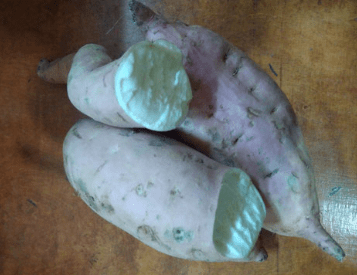
Sweet Potatoes
Cucumbers
Tomatoes
Broccoli
A piece of Pumpkin
Kale
Dill
Potatoes
And cabbage
Larger ones also:
Parsley
Swiss Chard
Coriander
And cauliflower
Fruit baskets :
Sweeties
Temple and Orr tangerines
Oranges
Larger ones also:
Red Grapefruit
Apples
And Lemons